KMG
KMG used a different method for the pendulum ride, as they called it, when they launched the Afterburner in 1998. Rather than driving it from the bottom, they used drive motors at the top of the 39-foot (12-meter) tall structure, thus allowing the gondola to be much more open than on the Frisbee. The gondola can swing up to 120°, reaching 72 feet (22 meters) in the air. The ride usually uses manual settings for the drive, with 15%, 40%, and 100% as options. You can imagine that 100% corresponds to its maximum 120° swing, which also has a limiter for approximately four swings before the car returns to the 40% setting.

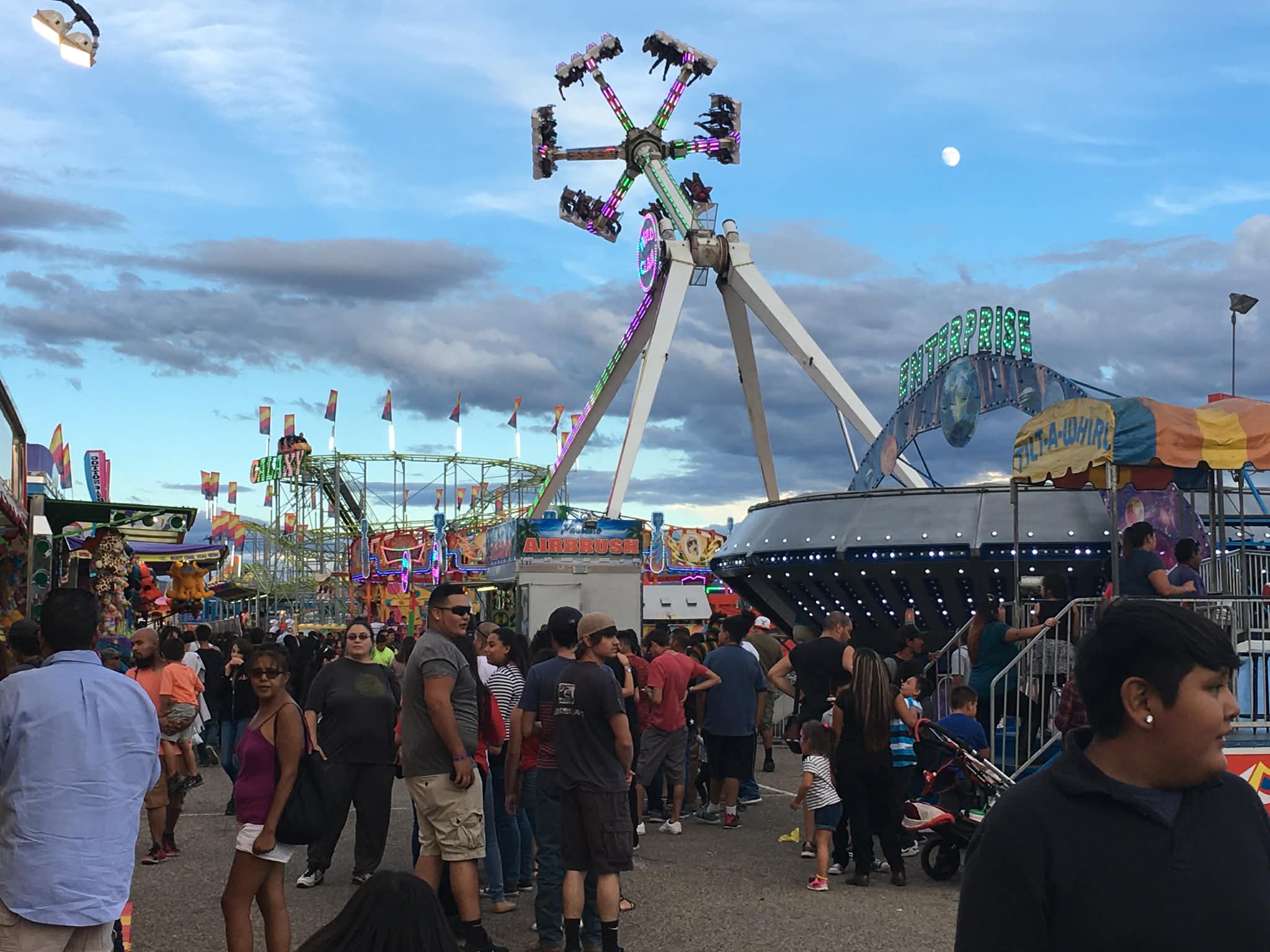
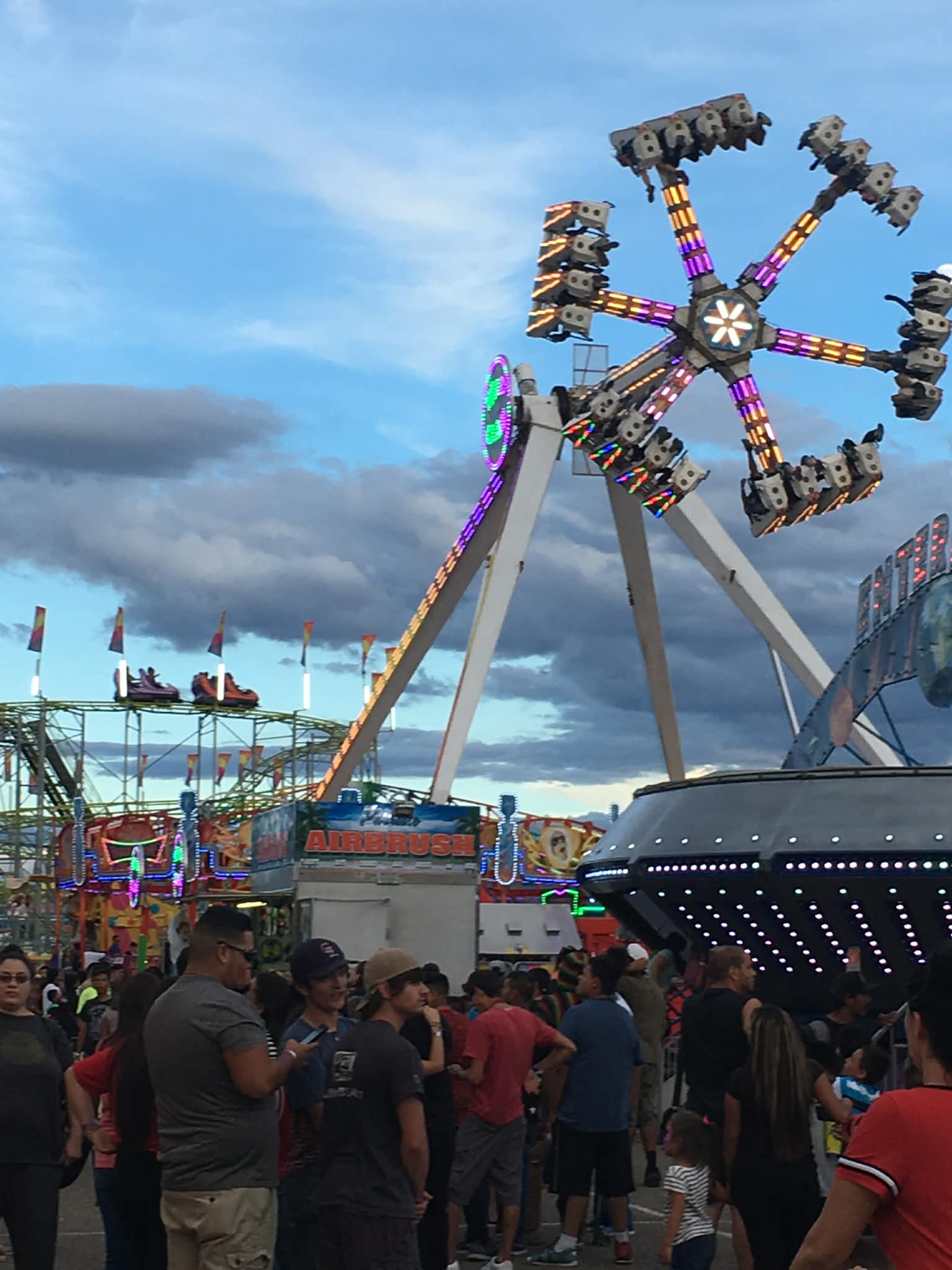
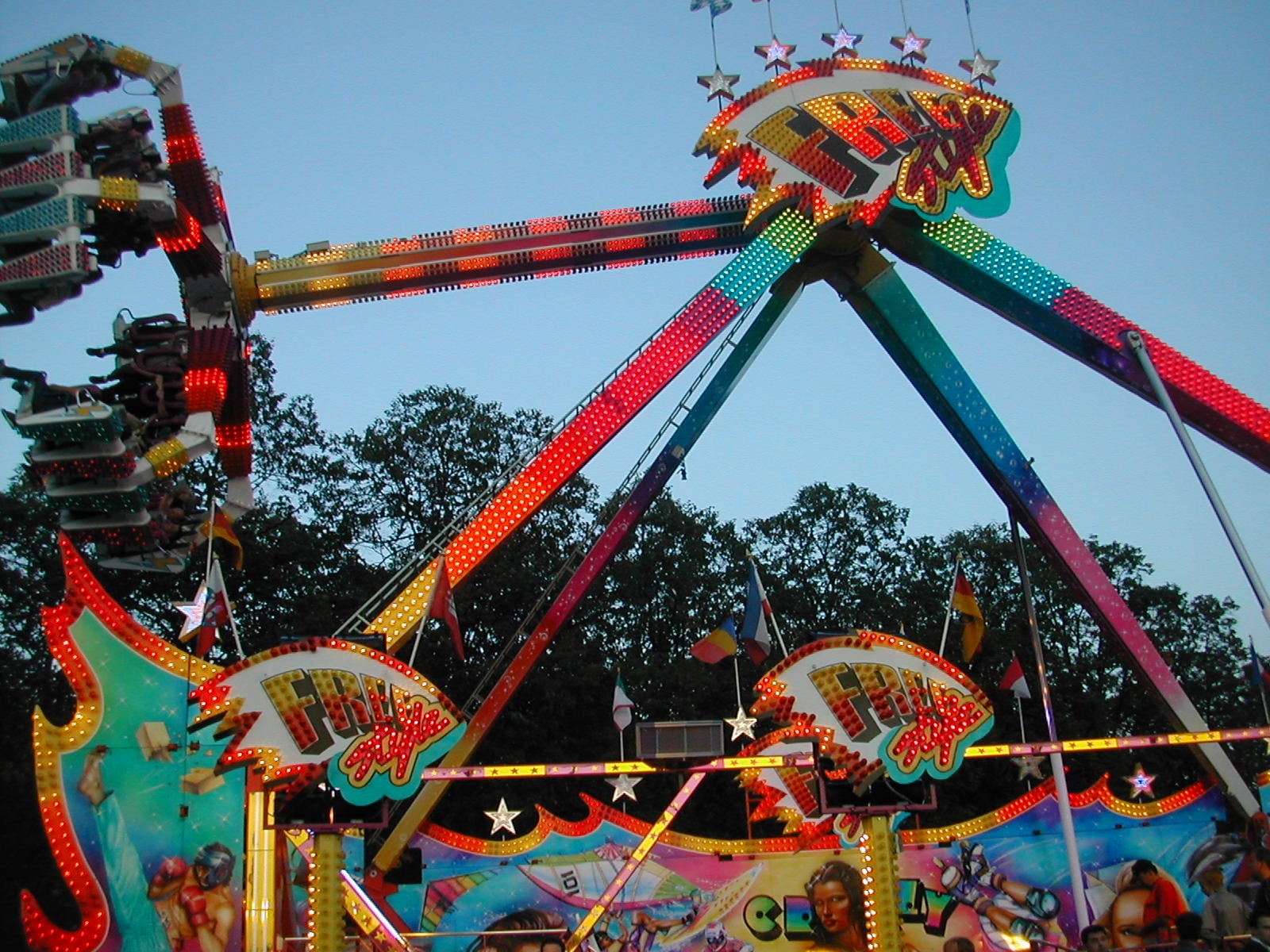
Afterburner at different fairs throughout the years.
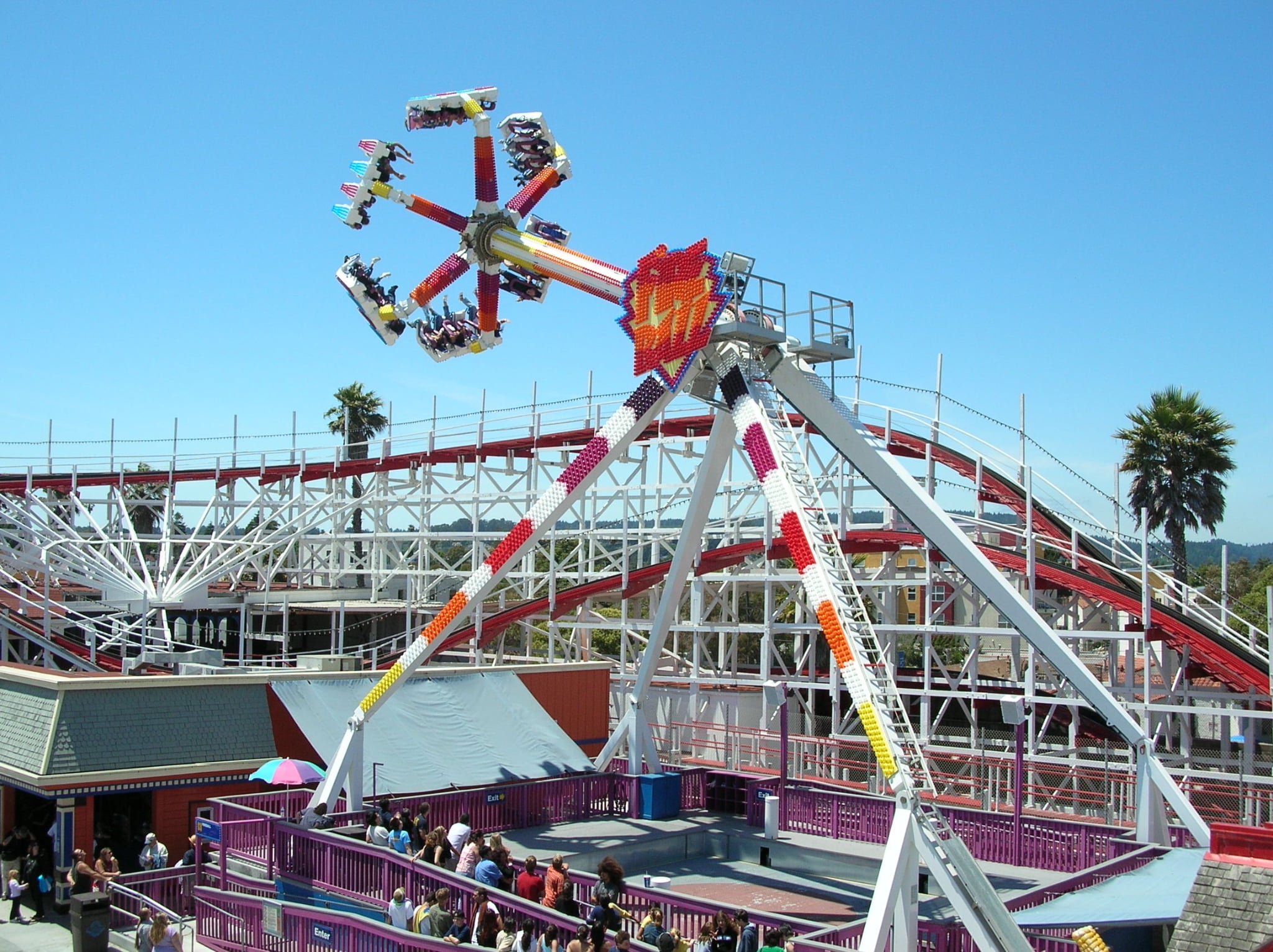
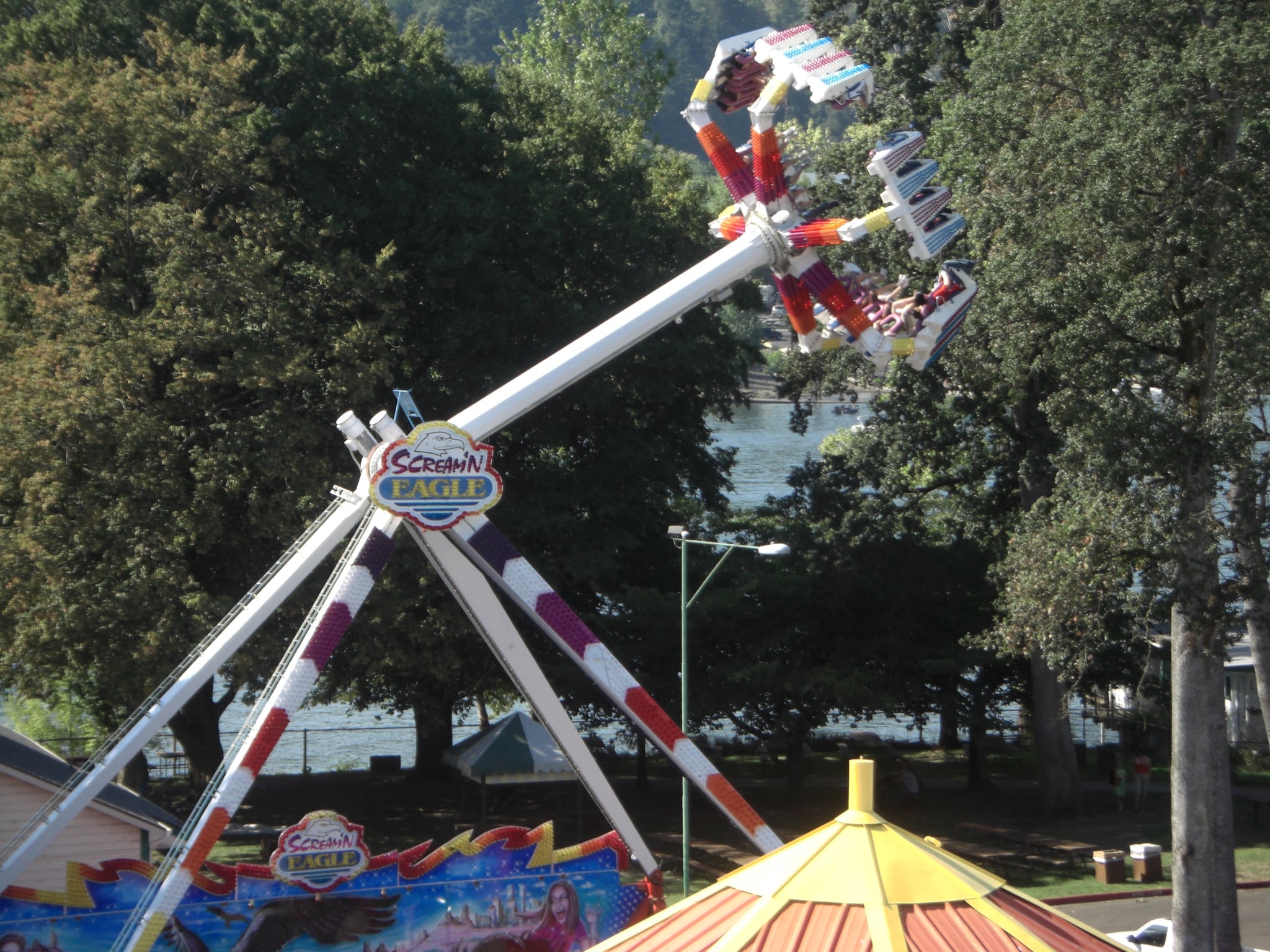
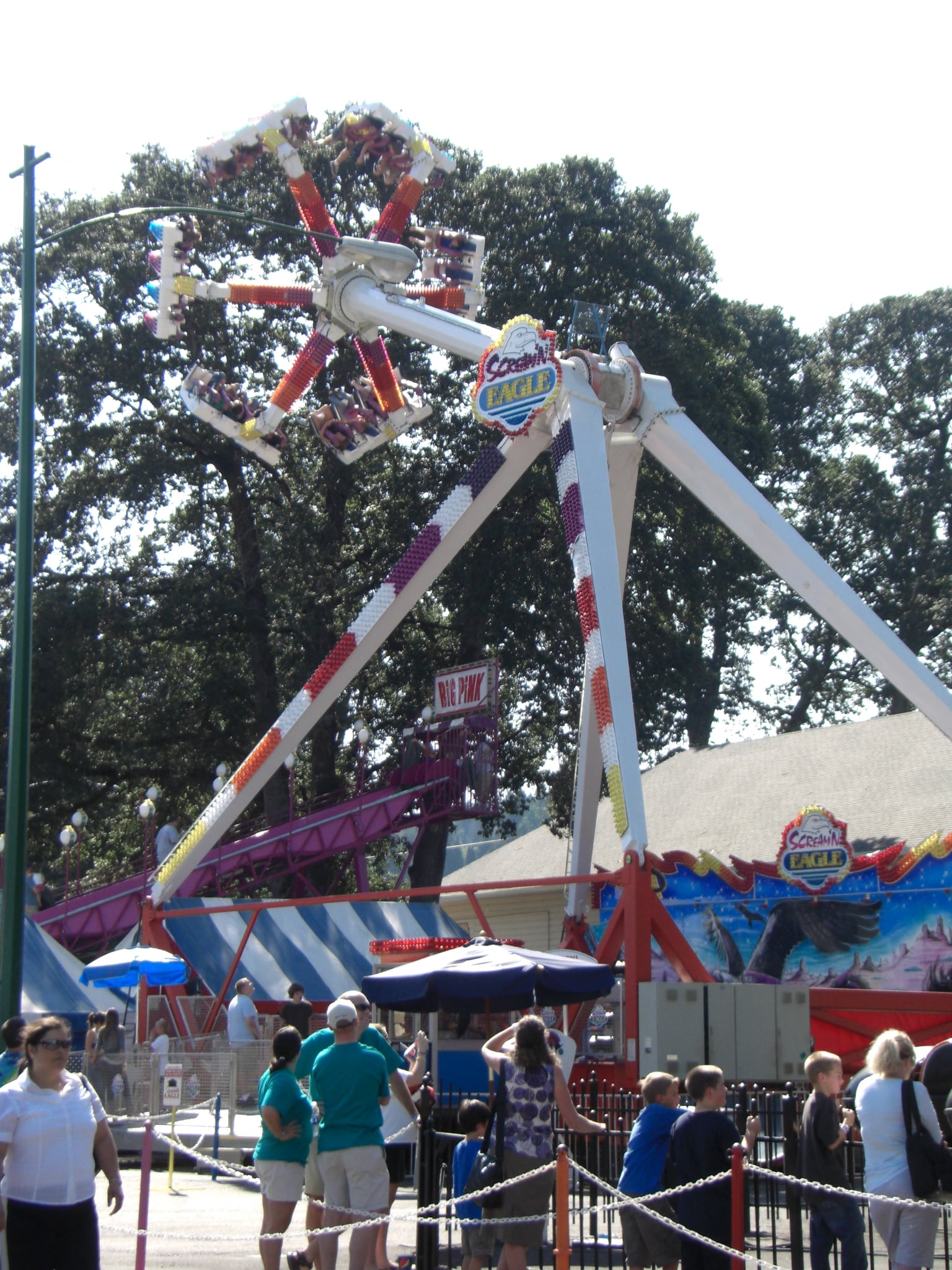
The gondola seats 24 riders, with six arms. Guests feel completely open, and the rotation can spin at a dizzying 15 rotations per minute in a clockwise direction, which is extremely fast. Combined with the powerful swings, it is quite the experience, and many carnival operators have seen great success with it. It is transported on two trailers and is a self-contained attraction when assembled. There is no need to bring in an external crane, which reduces the costs of transporting it. Some parks also installed permanent installations, such as Lightwater Valley (Ripon, United Kingdom), Drievliet (The Hague, Netherlands) and Santa Cruz Beach Boardwalk (Santa Cruz, California). Oaks Amusement Park (Portland, Oregon) purchased a portable model in 2001 and installed it at their park. It ran until 2017.
In 2001, Thorpe Park (Chertsey, UK) opened the first stationary Afterburner, Vortex. This oversized Afterburner has a massive structure due to its 32-passenger gondola. Eight arms with four riders per arm provide greater capacity than the usual Afterburner, which is critical at a busy theme park like Thorpe Park. The ride itself is slightly shorter than the regular model, with the car reaching 65 feet (20 meters) at its maximum 120° swing.

The Freak Out premiered in 2003 and is the simpler one-trailer Pendulum Ride from KMG. Rather than using a pair of wide A-frames, the Freak Out uses a simpler structure with the gondola swinging out between both A-frames. In comparison, the Afterburner has the car go through each A-frames.
The structure is 43 feet tall (13 meters), and the car, due to its smaller diameter, can reach 69 feet (21 meters)in the air. The gondola here has four arms, each for four riders.
The XXL takes the Freak Out, but upscales it: the new 20-seat gondola with four arms, each seating five riders, reaches an incredible 154 feet (47 meters) in the air at its maximum swing. It requires three trucks to transport this spectacular attraction and the PNE Playland currently operates one as The Beast since 2015.

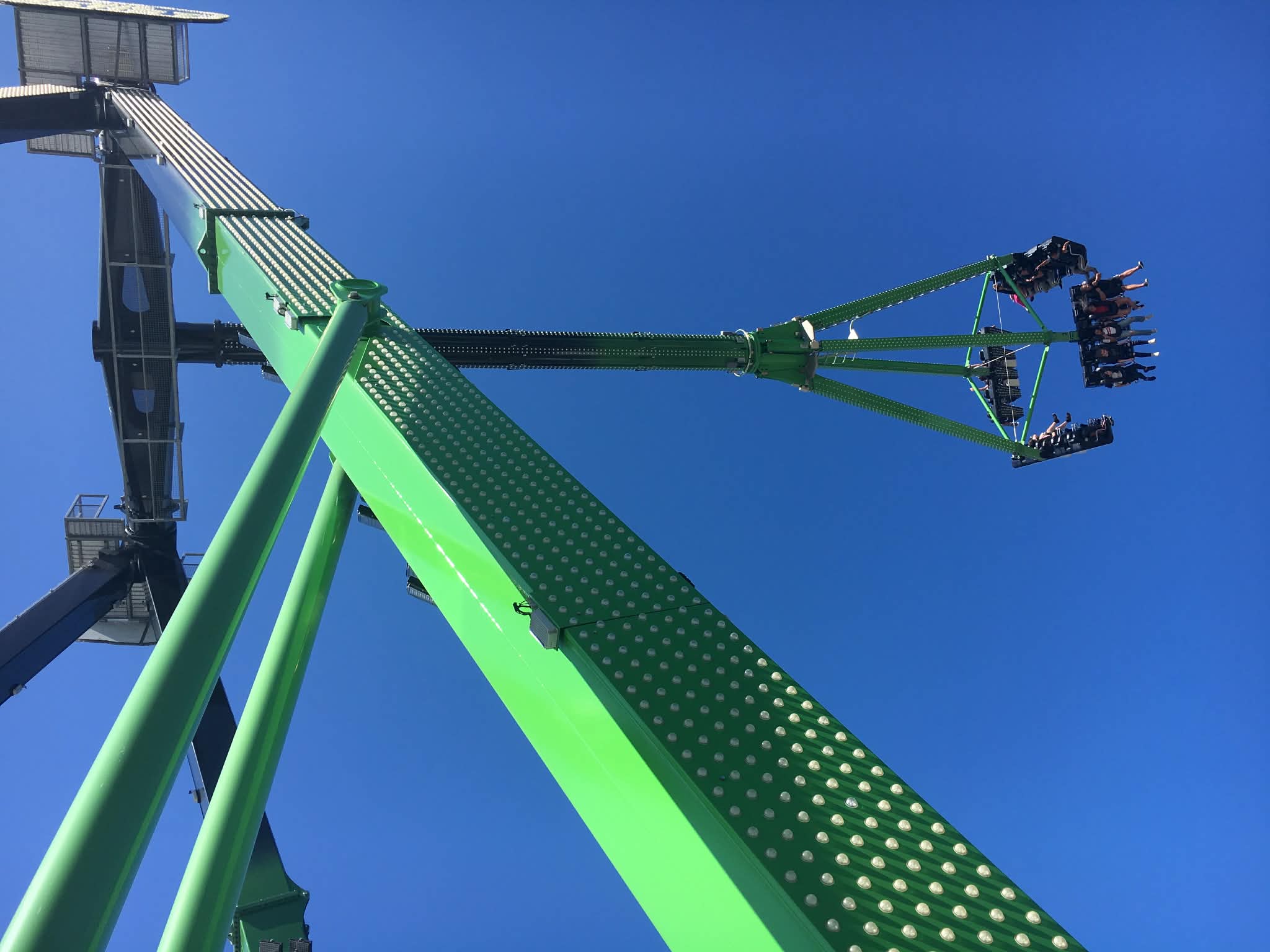
In 2011, KMG delivered its first Afterburner with an innovation: lap restraints. Morey’s Pier (Wildwood, NJ) requested that to provide additional thrills. Since then, some new Freak Out are also equipped with lap restraints. Another modification to Afterburner is the ability to spin the gondola clockwise and counterclockwise to vary the thrills.
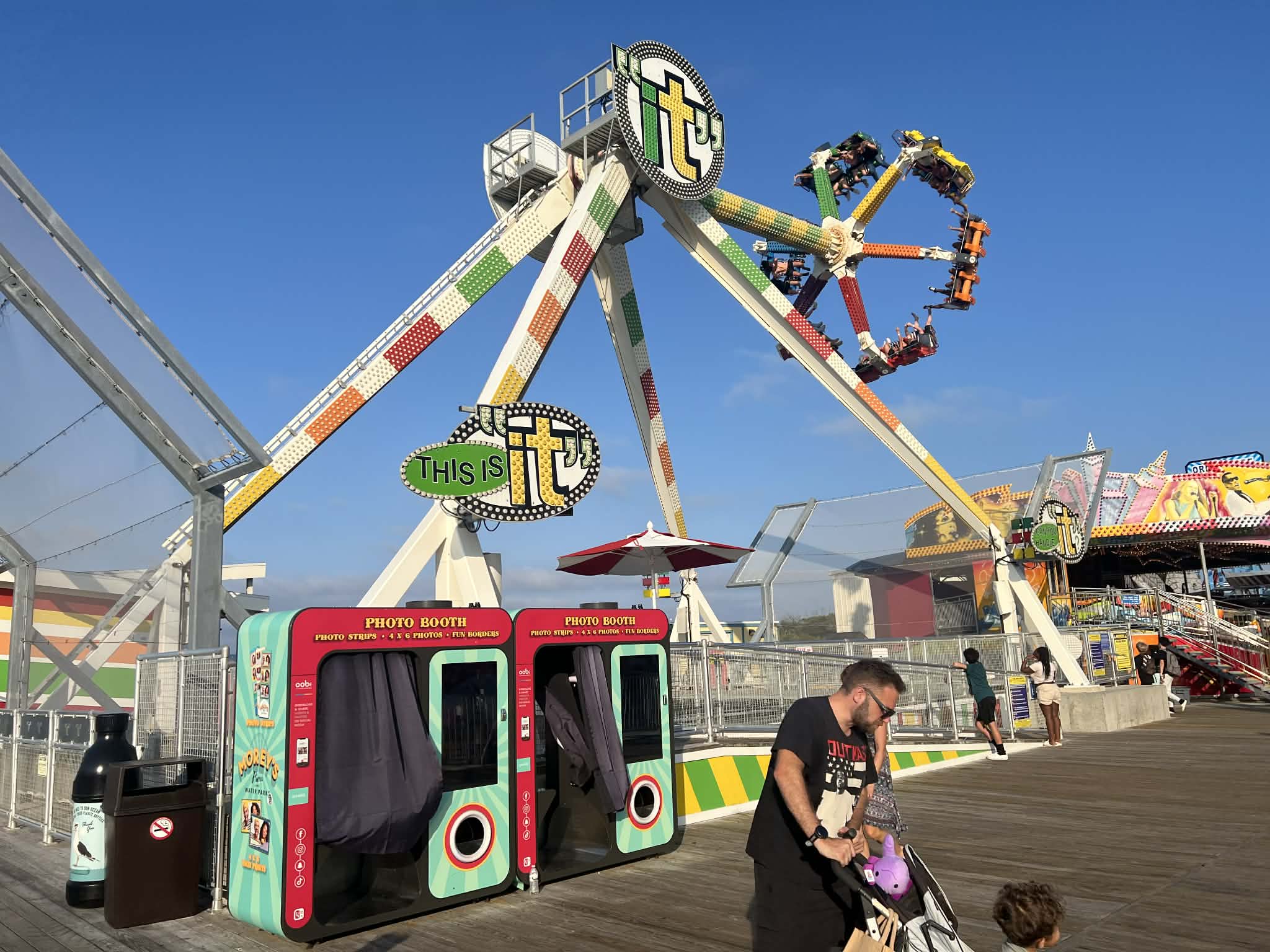

The Afterburner originally opened with a 1.20 meter (47 inches) height restriction, but was later revised to 1.40 meters (55 inches).
Chance Rides
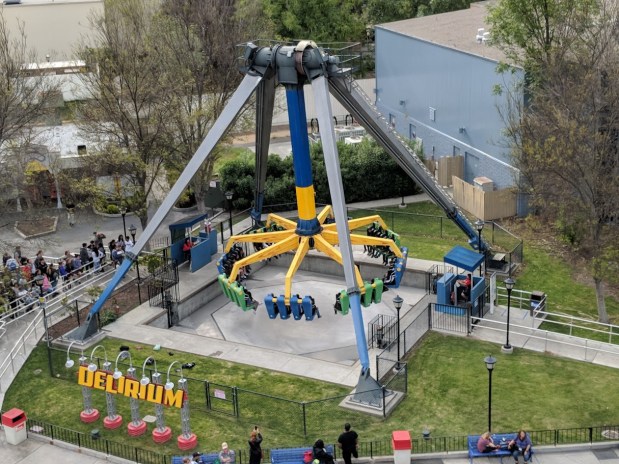
In 2002, Chance Rides started delivering the 32-seat Afterburner to clients around the United States. Based on KMG’s designs, those rides were produced under license at the Wichita, KS plant. The first park to open a Revolution 32, as Chance Rides called them, was Paramount’s Great America (now known as California’s Great America) in Santa Clara, CA. Opening in 2002, it was very similar to the KMG version. Still, with a slight difference in ride programs: the rotations were calculated so that the same riders often ended up at the same point each time the gondola reached its apex.
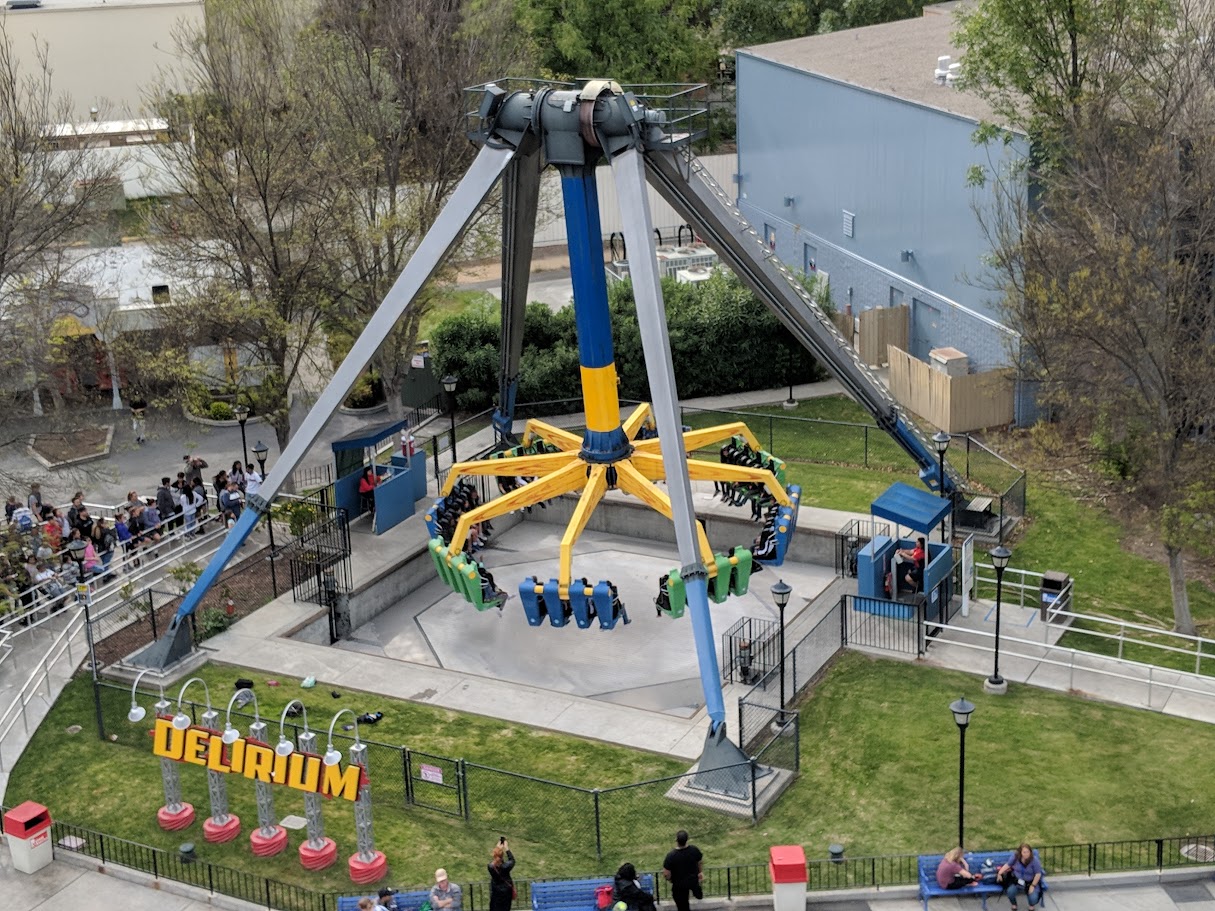
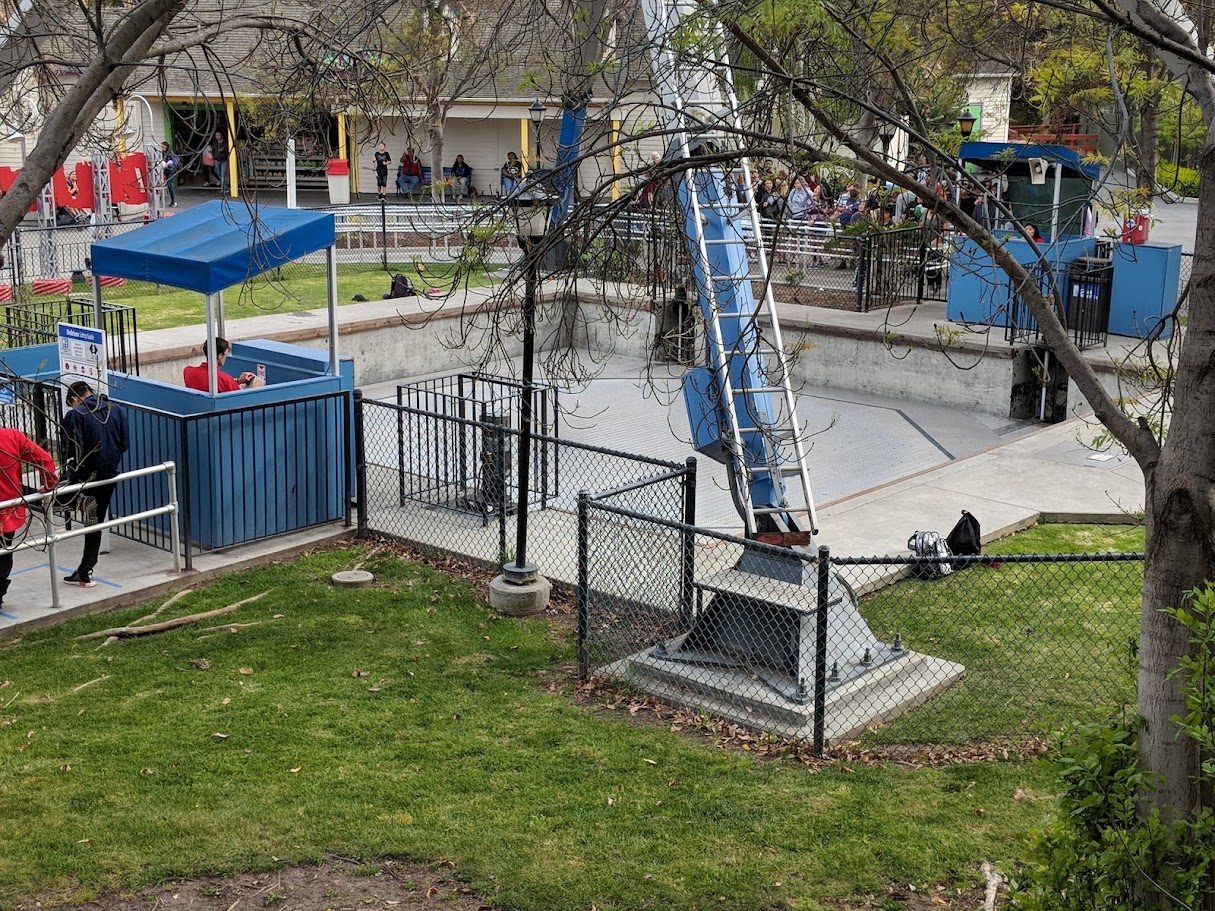
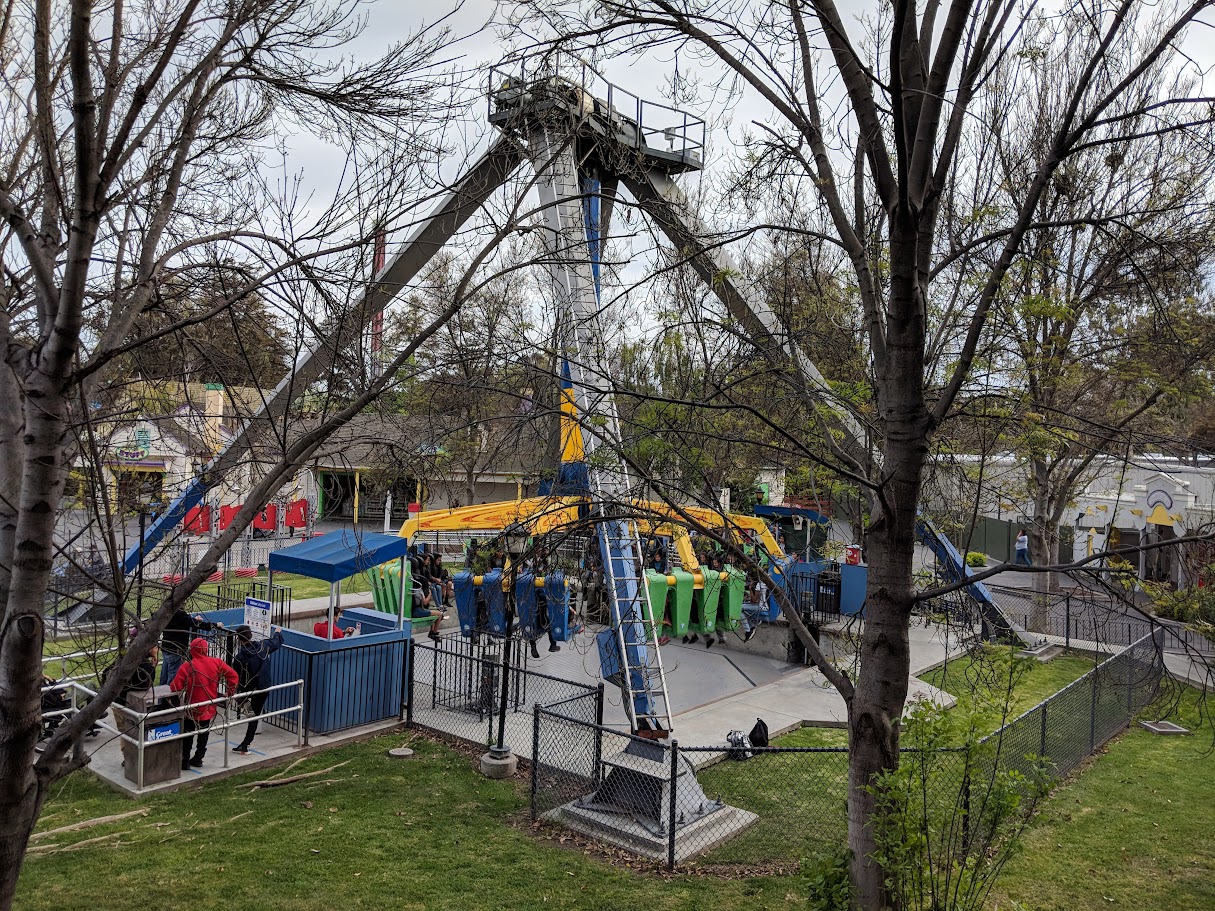
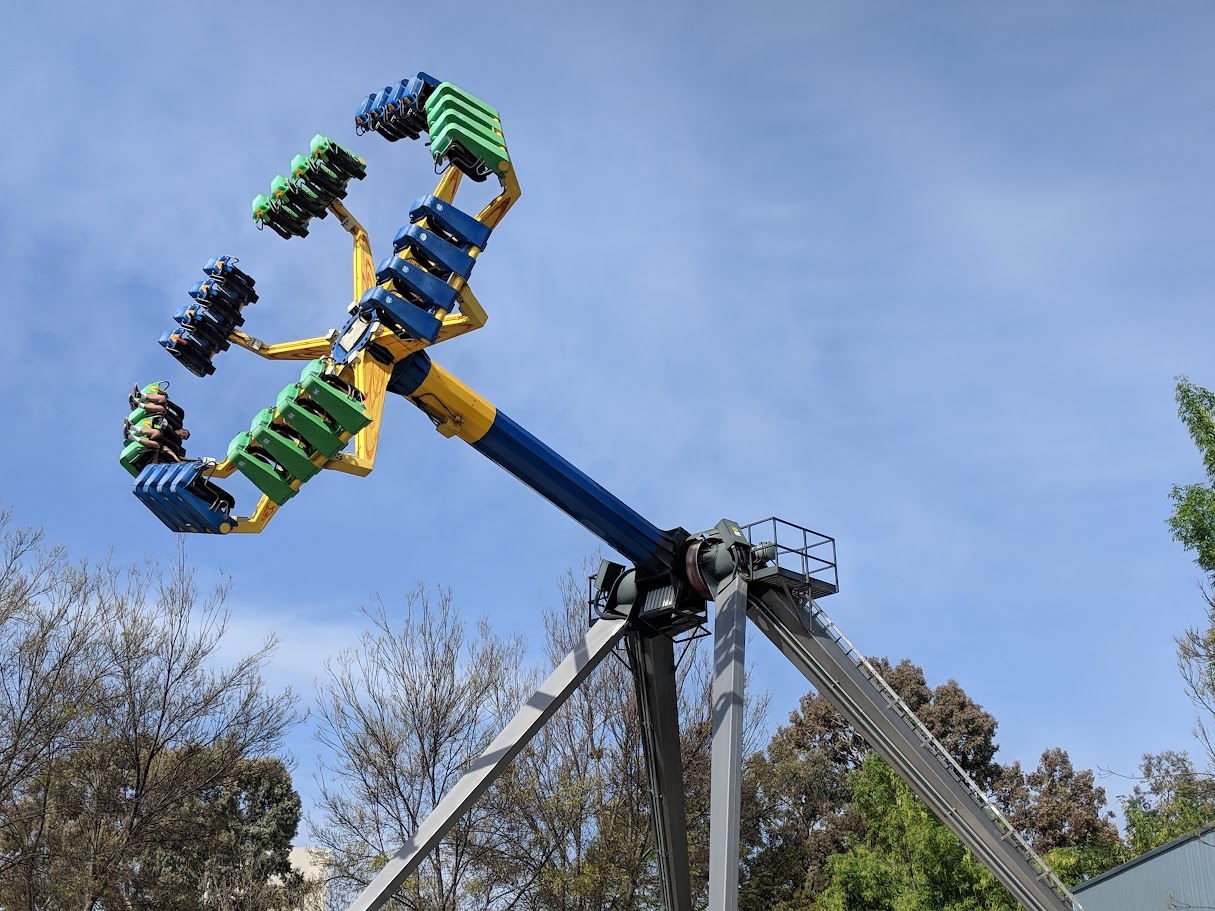
Delirium at California’s Great America (Santa Clara, CA)
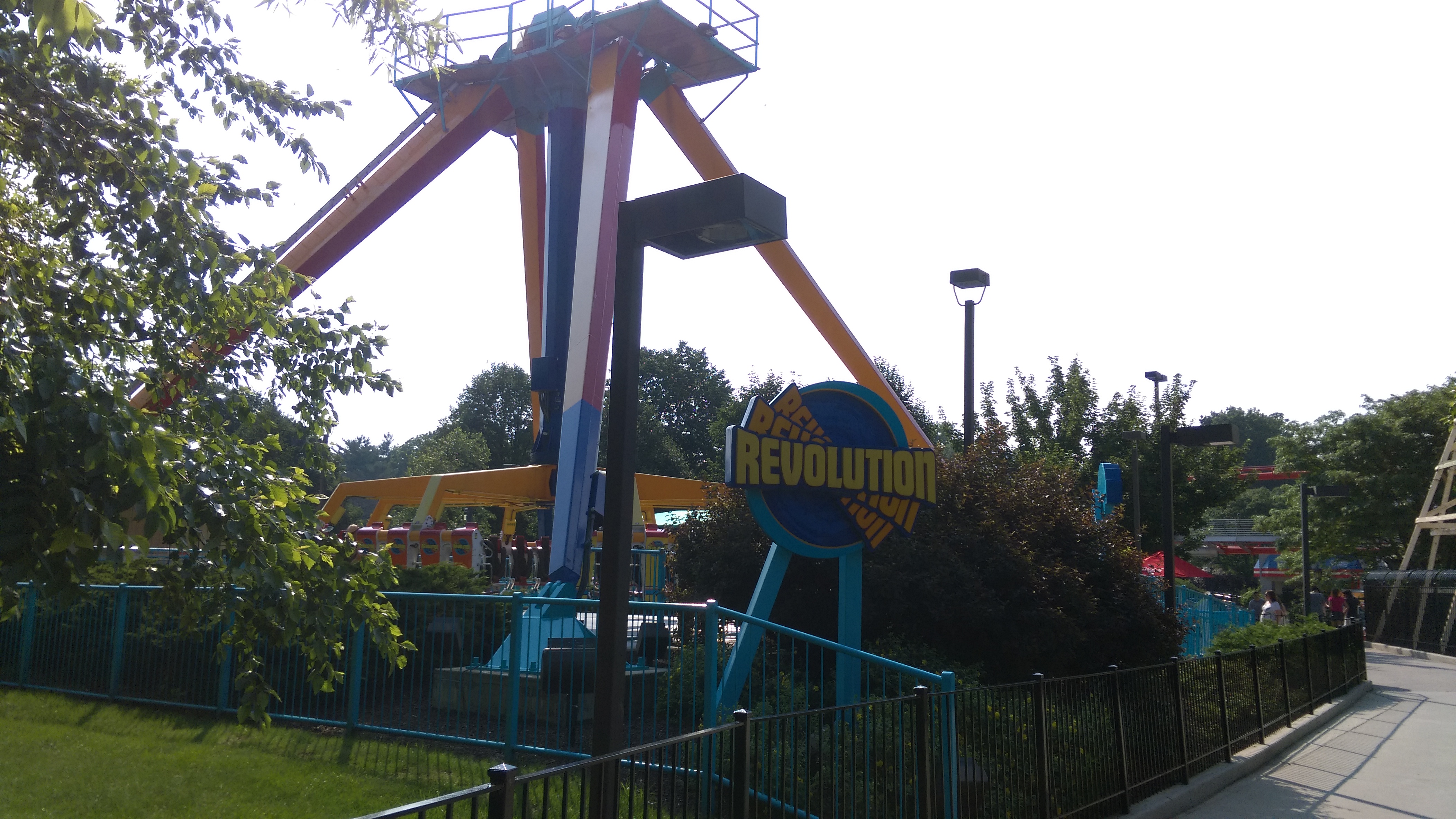
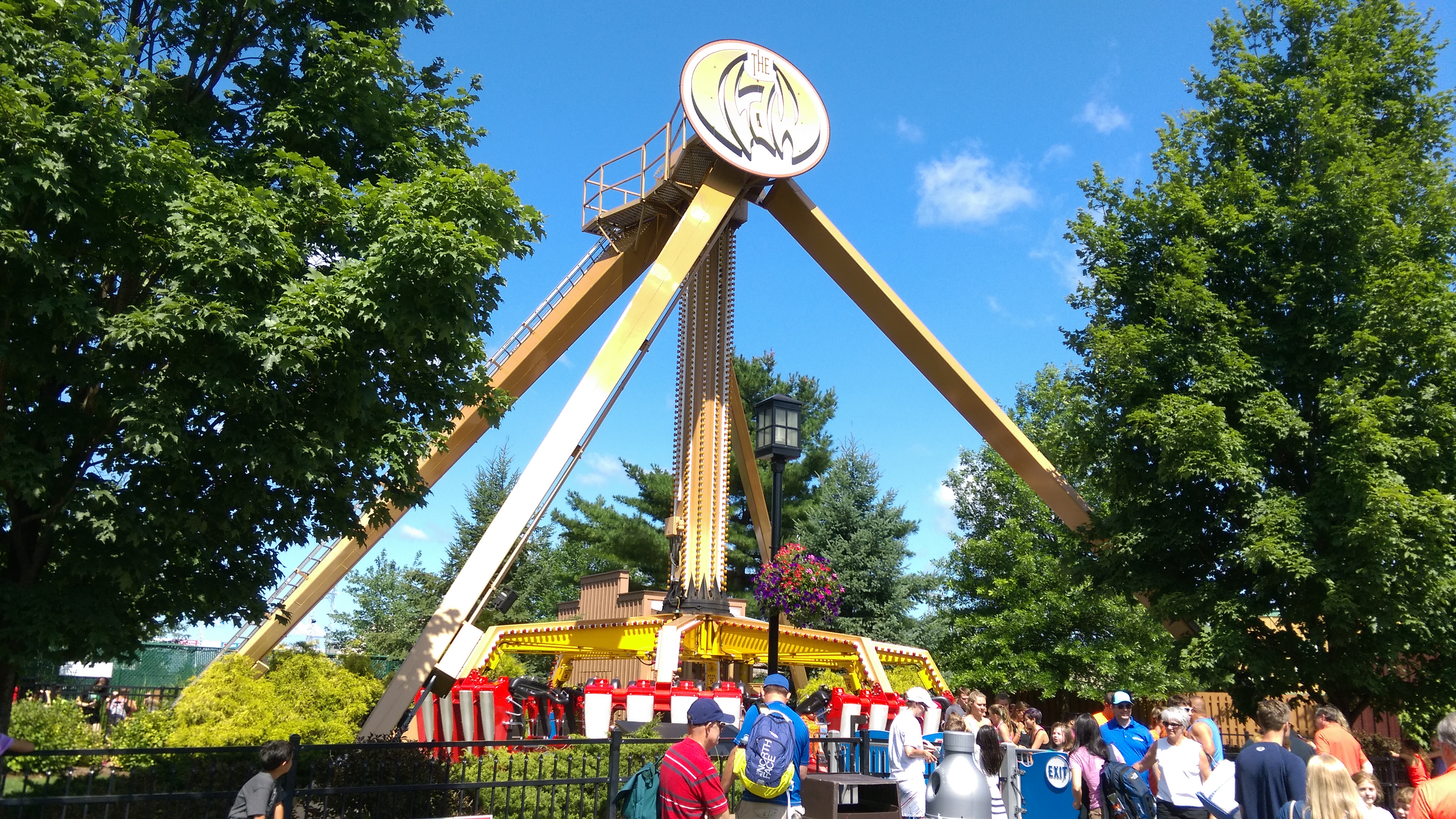
Dorney Park (Allentown, PA), Hersheypark (Hershey, PA)
There was an issue when it came to selling that product on the American market: a higher amount of larger riders. Even though the hydraulic shoulder bars will lock at a high point, the sensors that verify that the restraint is secure have a low tripping point. This results in some larger riders having to exit the ride. This is not much of an issue in Europe, but in the USA, it is a challenge for operators. The end seats were modified to give larger riders a better chance at fitting, but it is still quite a challenge. One further difference is that they still have a 1.22 meters (48”) height restriction today.
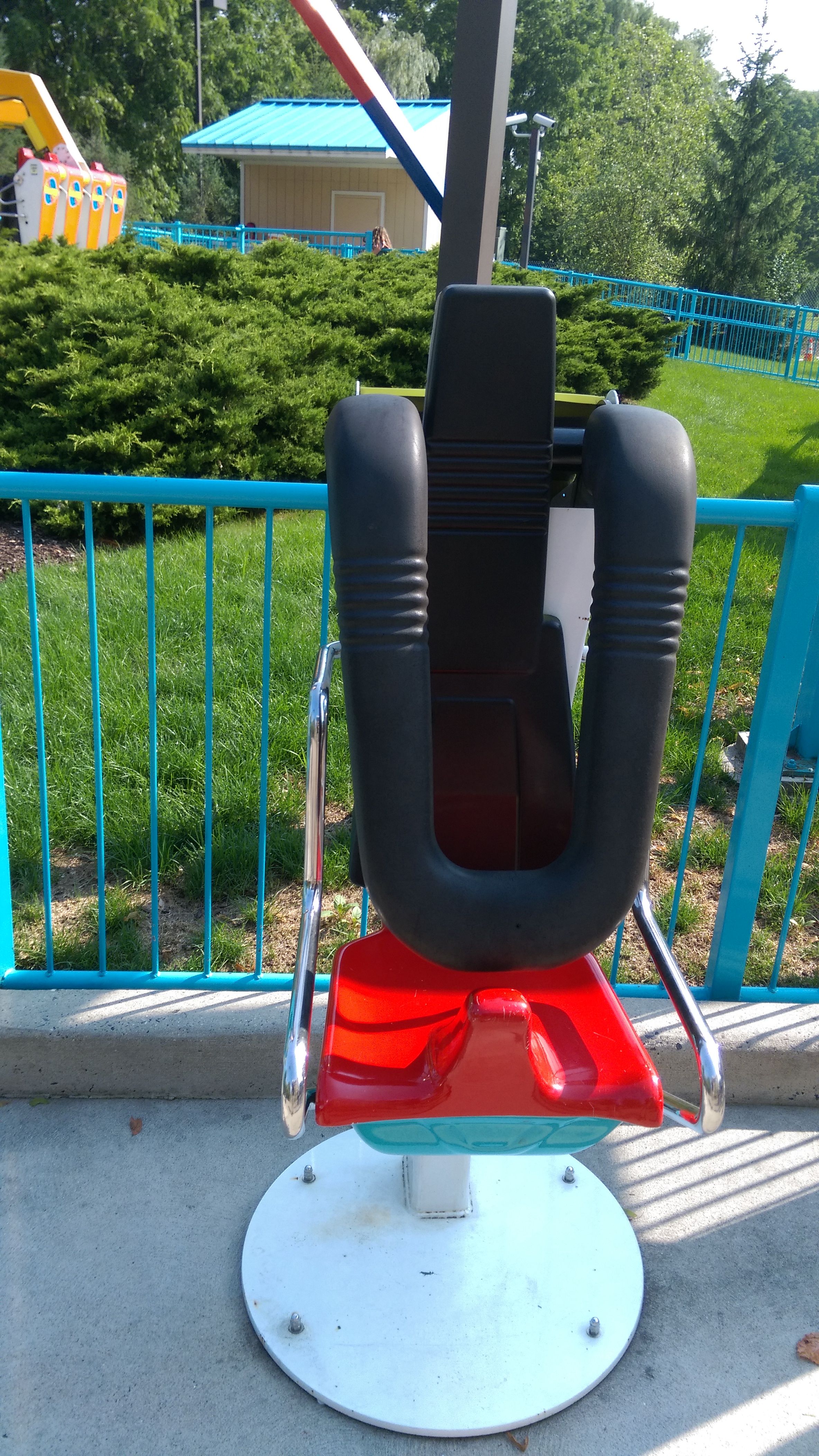
In 2005, Chance Rides designed its own version of the Afterburner, the Revolution 20. It is shorter in structural height, at 32 feet (9.6 meters), but the car still swings up to 54 feet (16 meters) in the air. It is currently offered as a permanent park version only.
 ParkVault