Analysis of year one issues and how they were solved:
The park opened with 6 hotels and a campground with 595 cabins in a quiet forest a few miles from the resort. This was a daring proposition, as offering 5800 rooms for a single gate was much more than Walt Disney World had opened with. In addition, they competed with all the hotel rooms in Paris, which is 35-40 minutes away by public transportation.
Suppose you count all of the mechanical attractions above, counting each river attraction and the railroad as one. In that case, you only come up with 19 rides and two continually running shows. Theatrical Show facilities were limited, with only two present throughout the park. There were also many sit-down restaurants, and the park did not serve alcohol.
While popular lore states that the number of hotels and a lack of popularity were to blame for the resort’s financial woes, the truth is much more complicated. According to Philippe Bourguignon, as read in his book Hop!, the cause is that the park, hotels, and Disney Village cost too much to build. Even though Walt Disney Imagineering burned money like it was going out of style designing and building Euro Disneyland, they only delivered a park with a capacity of 50,000 guests. Even with 50 000 guests in the summer and holidays, the resort could not make money.
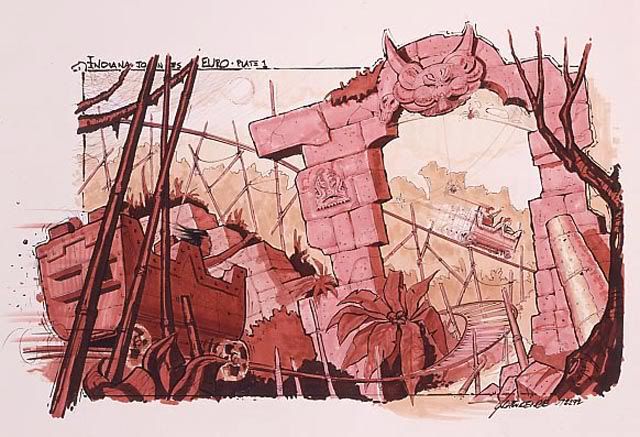
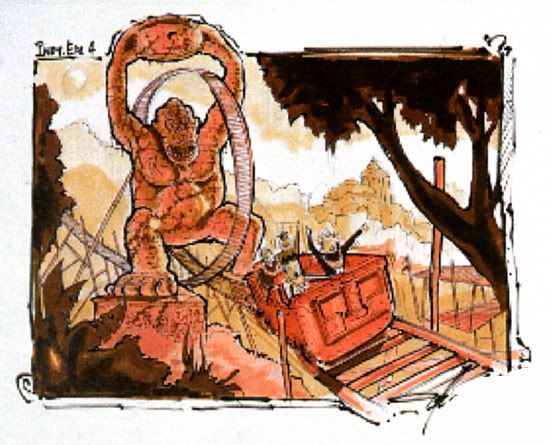
Adventureland and Discoveryland especially had massive capacity issues, as there was not enough to do there. In Adventureland, a Jungle Cruise was imagined early on as a part of a gigantic Indiana Jones complex with a roller coaster and jeep ride. Still, Imagineering ran out of money and did not deliver anything, leaving a massive plot of land empty on the left side of the land. While Star Tours is a fine attraction, per its nature, where guests often get sick while riding, something else was needed in Discoveryland.
Space Mountain, as seen at Walt Disney World, Disneyland, and Tokyo Disneyland, was already seen as an “old ride” at that point by Disney, and plans were worked up to leverage Jules Verne’s rich bibliography. Discovery Mountain was to be one of the largest ride show buildings in the world, housing a thrilling looping coaster, freefall ride, restaurant, and walkthrough based on the Nautilus. The roller coaster would go outside and into Hyperion using the plugged-up holes. In addition, something else called the “Spark Gap Coaster” was proposed for Discoveryland. Judging from the single concept drawing that was made public, it appeared to be a family coaster. Small two-car trains spiraled around futuristic towers in a very compact plot of land.
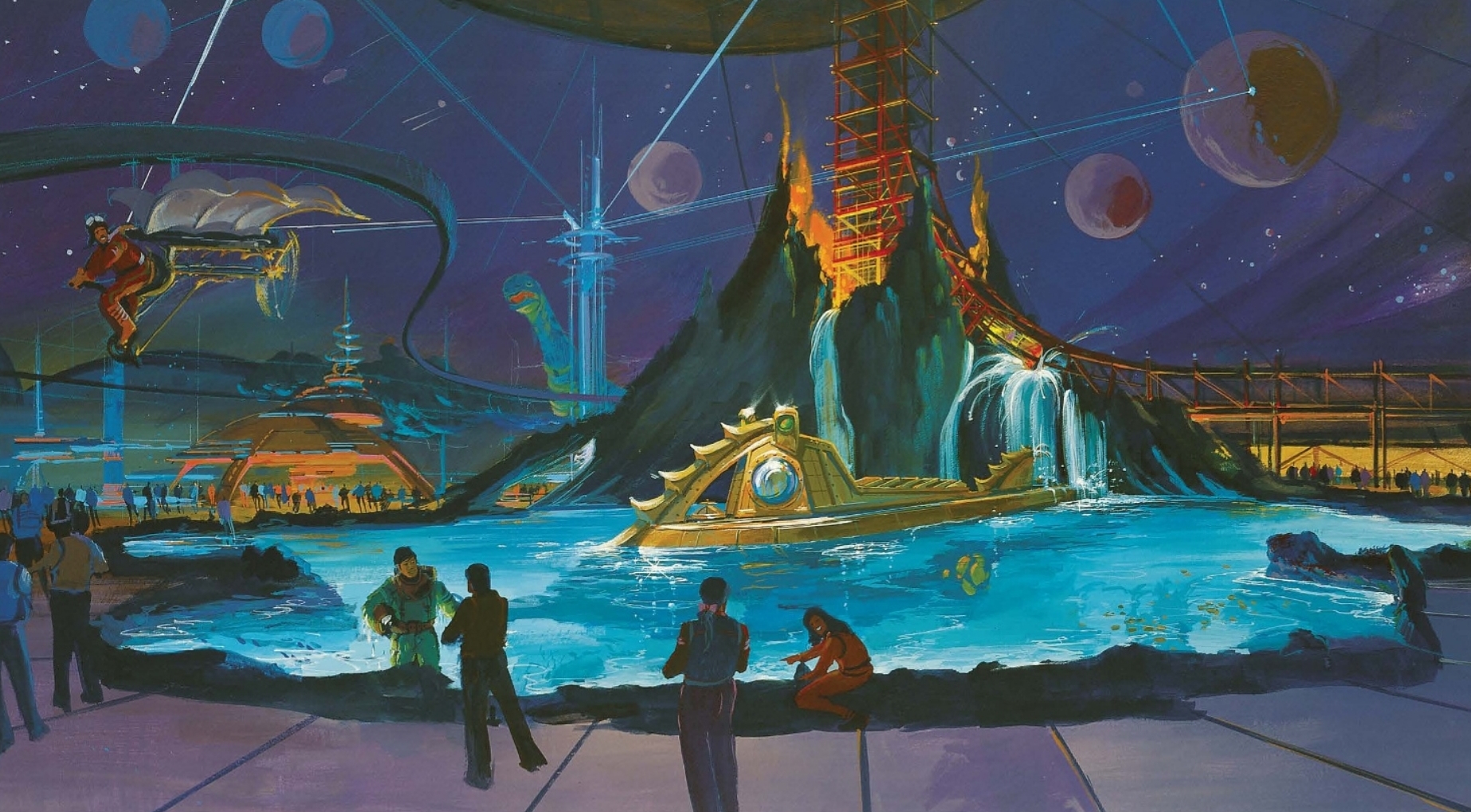
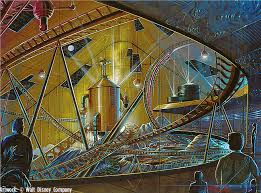
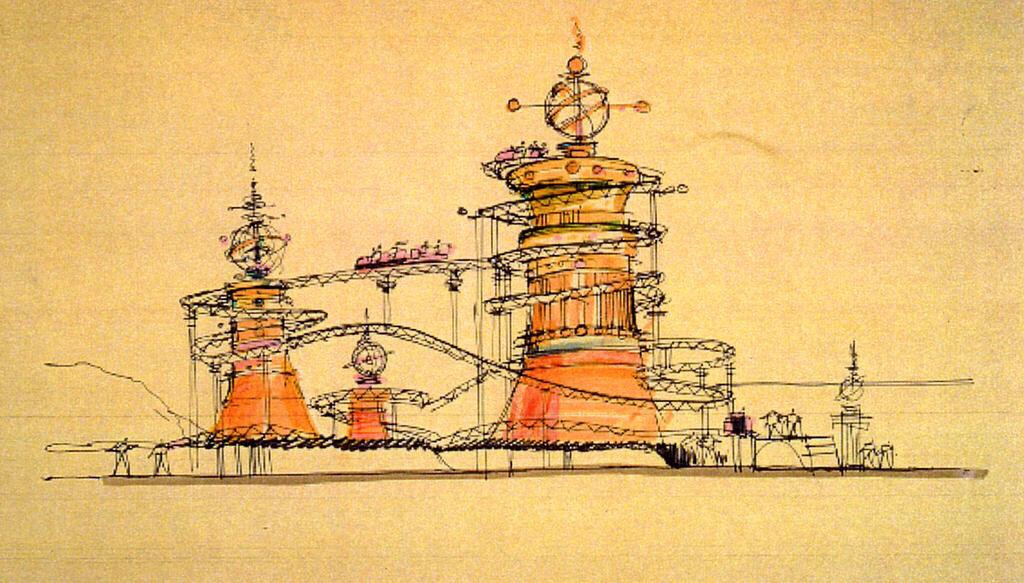
Alas, Indiana Jones and Discovery Mountain were all victims of the obsession at Imagineering with the “Blue Sky Concept.” The idea here is to start with a blank page and the impossible. Gravity does not exist, space constraints are not a thing, and you do not need to worry about maintaining your idea. Months into studying those concepts, reality comes roaring in, and millions of dollars and many months of work are spent coming up with something realistic that fits the space and can be built and maintained. Euro Disneyland was suffocating under the debt of what had already been built. There was no time or money to wait for Imagineering to come down from the blue sky and return to Earth with finished projects.
Philippe Bourguignon, who was defacto running the resort since Robert Fitzpatrick was having issues managing the challenges, locked himself up in his house for a weekend with the financial numbers to look for solutions. Who is Philippe Bourguignon? He worked for 14 years at Accor (French hotel group) before Michael Eisner hired him to open and run the hotel and real estate side of Euro Disney. He did such a good job that he eventually replaced Robert Fitzpatrick as head of the resort. Michael Eisner formally named him CEO in early 1993, with Steve Burke (34 years old, never worked in a theme park) as his number 2.
Mr. Bourguignon emerged from his studies and confronted Michael Eisner with his findings: I was delivered a park capable of receiving 12 million guests a year. You spent so much money designing and building the resort that I need 14 million guests to make money! What was Disney’s attendance in its first year? 9 million guests. The 12-14-9 issue was the root cause of Euro Disney’s woes.
Philippe Bourguignon identified a few further issues: resort upper management consisted of Americans who did not take the time or had the desire to learn the lay of the land in Paris. They stepped on toes, offended people with requests deemed ridiculous by the local authorities, and so on. They also refused to take orders from the Paris team, as their answers were always: my boss is in Florida or California, not Paris.
Not selling alcohol kept guest spending down, and there were too many sit-down restaurants.
For the 1993-1994 80 million USD (400 million French Francs) capacity expansion, there was no time to dust off the original phase 2 plans. Plans B and C’s were created in a rush by Walt Disney Imagineering to boost capacity.
As seen in our series of articles on the attraction, a “temporary” Indiana Jones et le Temple du Peril roller coaster (Indiana Jones and the Temple of Peril, https://parkvault.net/2016/03/13/indiana-jones-et-le-temple-du-peril-part-1-of-our-look-at-disney-first-looping-attraction/) was quickly designed by starting from the Spark Gap Coaster concept and Intamin was awarded the fabrication contract. As the opening date was barely a year after the ride green light was given, corners were not just cut but chainsawed. Intamin and the Stengel Engineering company used the Pinfari TL-59 portable looping coaster as the basis for the layout. That layout was old and had deficient engineering, so Stengel had to work hard to fit Disney’s capacity, comfort, and reliability criteria.
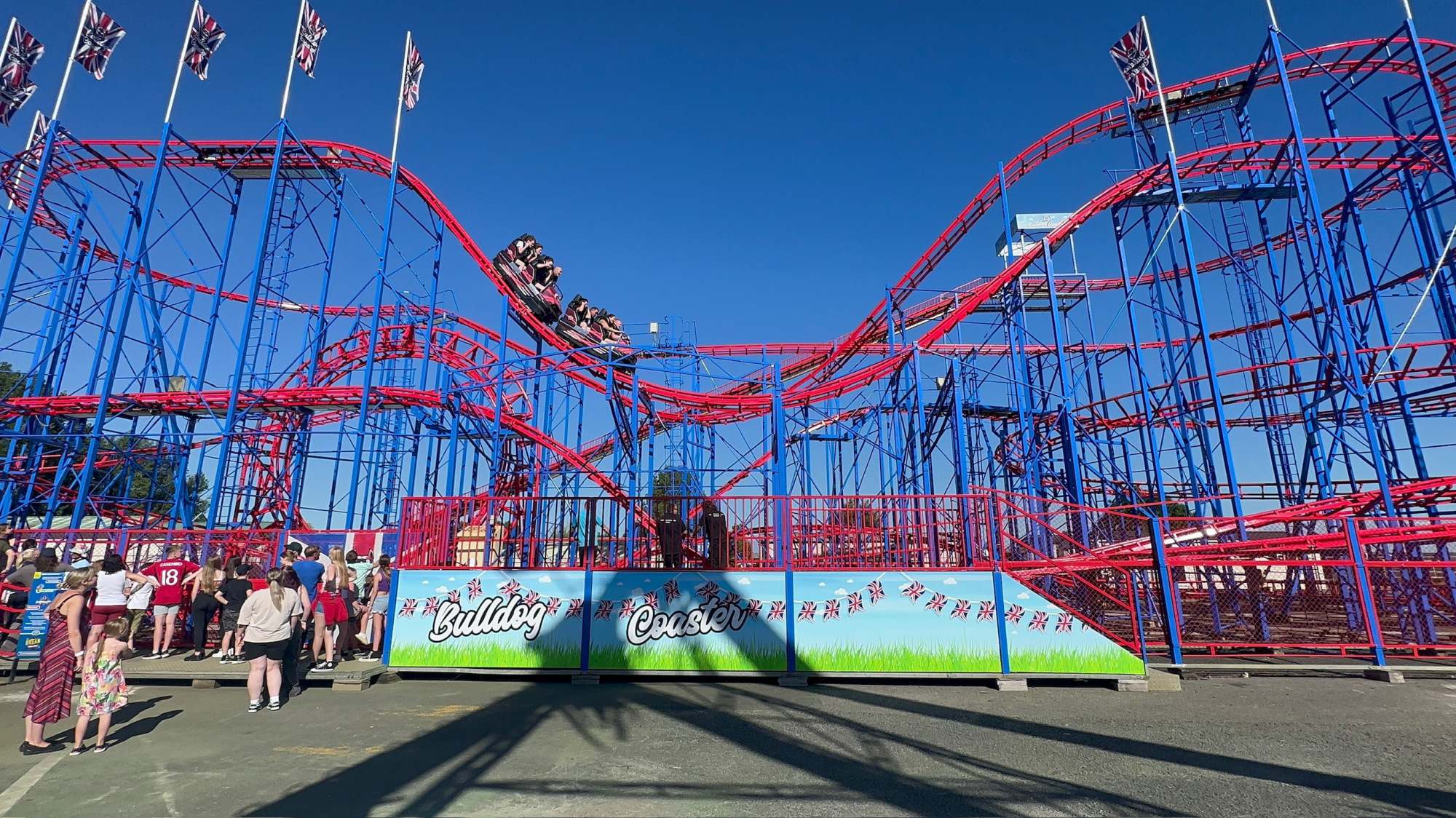
The Bulldog Coaster at Brean Theme Park https://breanthemepark.co.uk/rides/view/crazy-loop. It is one of the last original Pinfari TL-59 roller coaster.
Theming-wise, there was no time to make a temple out of shotcrete (Projected and carved concrete on a steel frame), so a foam temple covered with a thin layer of decorative concrete was hastily constructed around the roller coaster track, along with scaffolding and static props. The queue is a jungle path with abandoned trucks and props, no moving items, and no references to Indiana Jones beyond his tent and hanging hat and whip. Four natural gas torches that light up the night with massive flames elevate the experience beyond what parks like Walibi Wavre (now Walibi Belgium) and others were doing then.


The ride system Intamin selected uses compact two-car trains with four passengers in two rows in each car. Five trains could run at once, but even with that, capacity was barely approaching 800-1000 riders per hour. The ride opened officially on July 30th, 1993, and was quite popular, with massive queues.
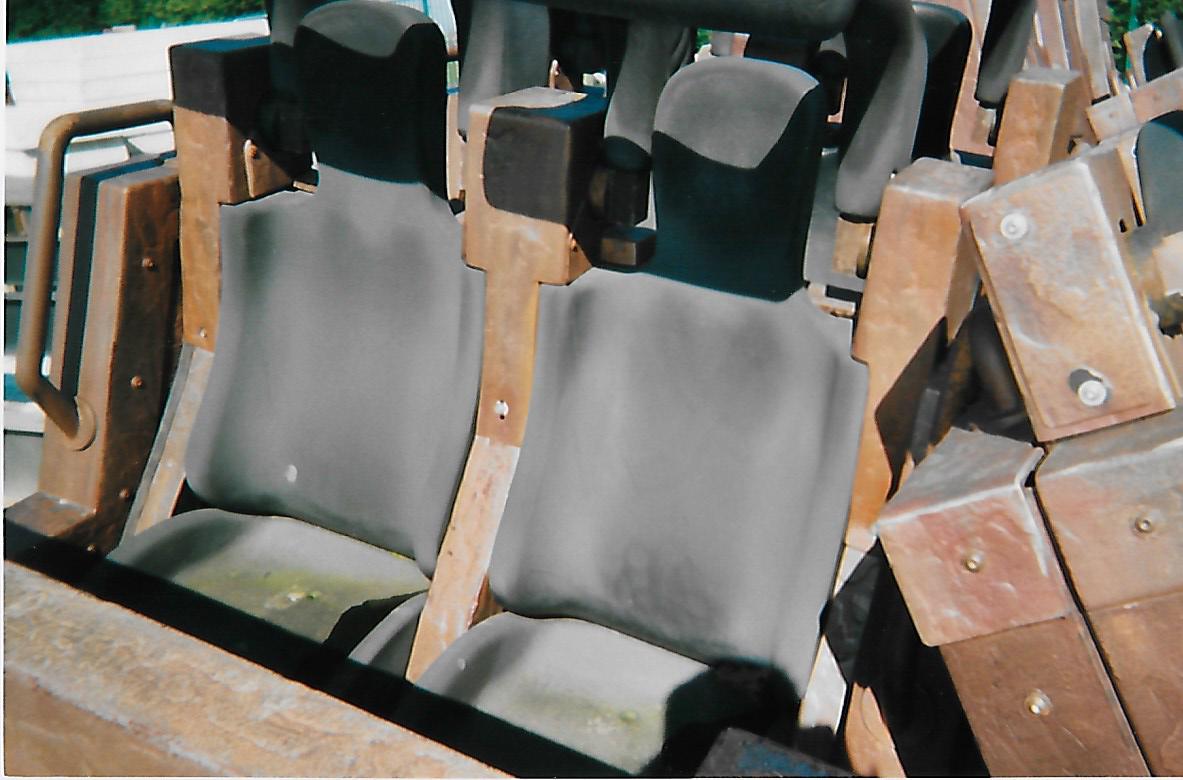
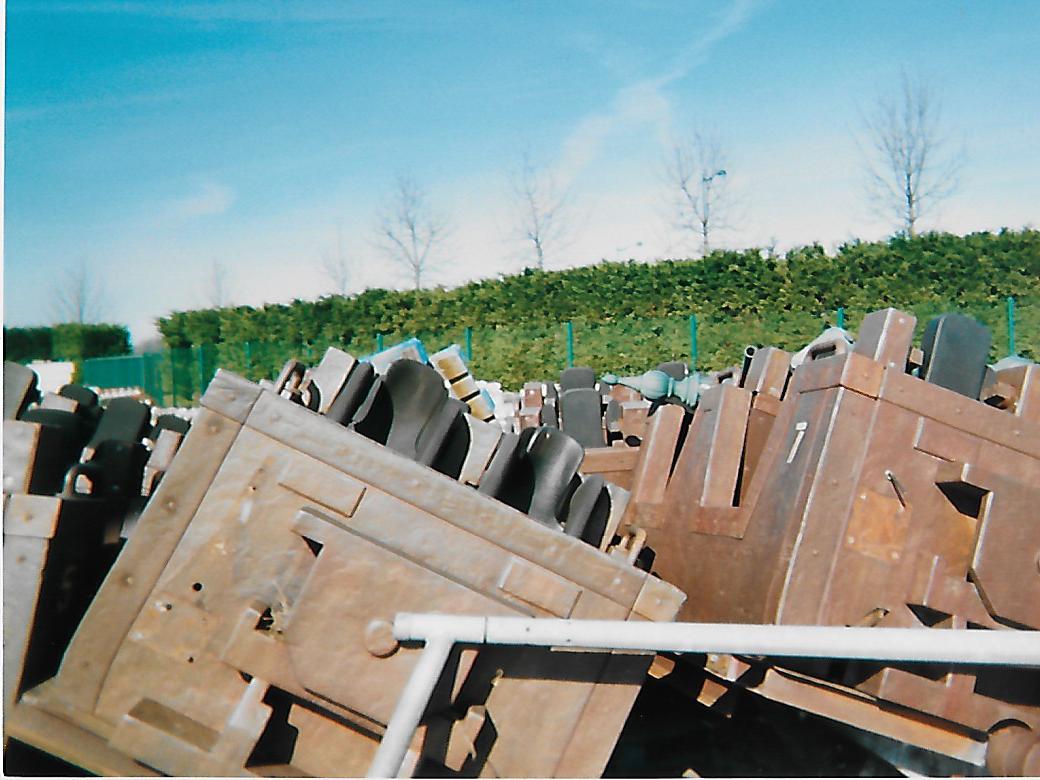
The original 4 passenger ride cars, shortly before they were scrapped.
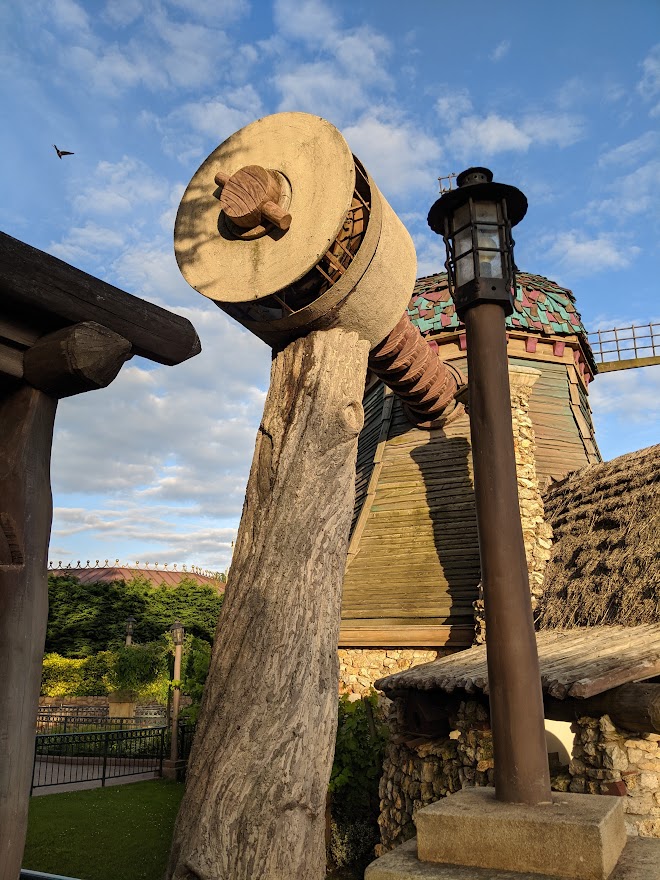
In addition to the Temple du Peril, a small Ferris wheel was constructed behind the Old Mill snack stand in Fantasyland. Walkthrough attractions based on Sleeping Beauty, Aladdin, and Wild West artifacts opened in 1993 in Fantasyland, Adventureland, and Frontierland.

The restaurant selection was adjusted, with the Explorer’s Club turning into a quick-service restaurant to boost restaurant capacity. The Café des Visionaires was turned into an arcade due to a lack of demand for that location. The addition of beer and wine was popular and increased food and beverage revenues.
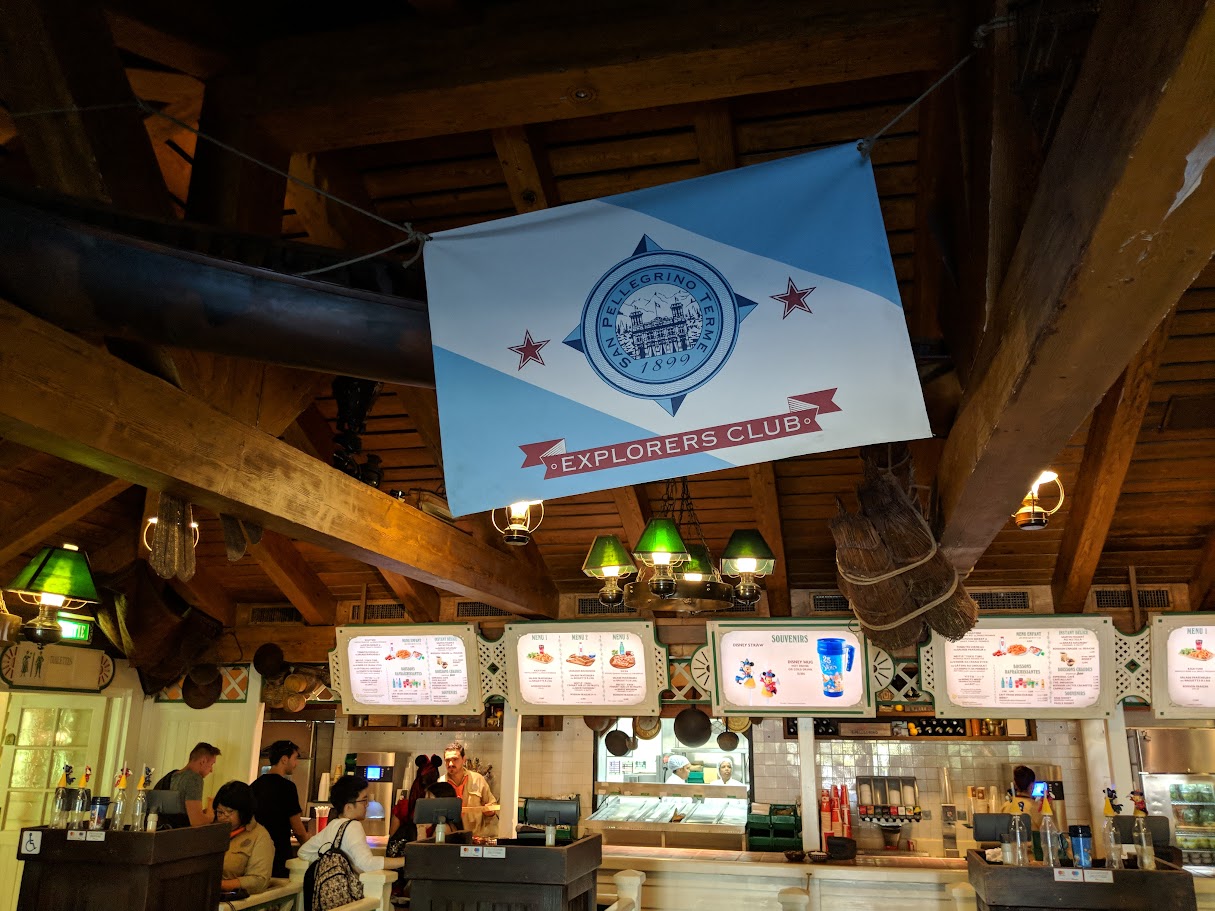
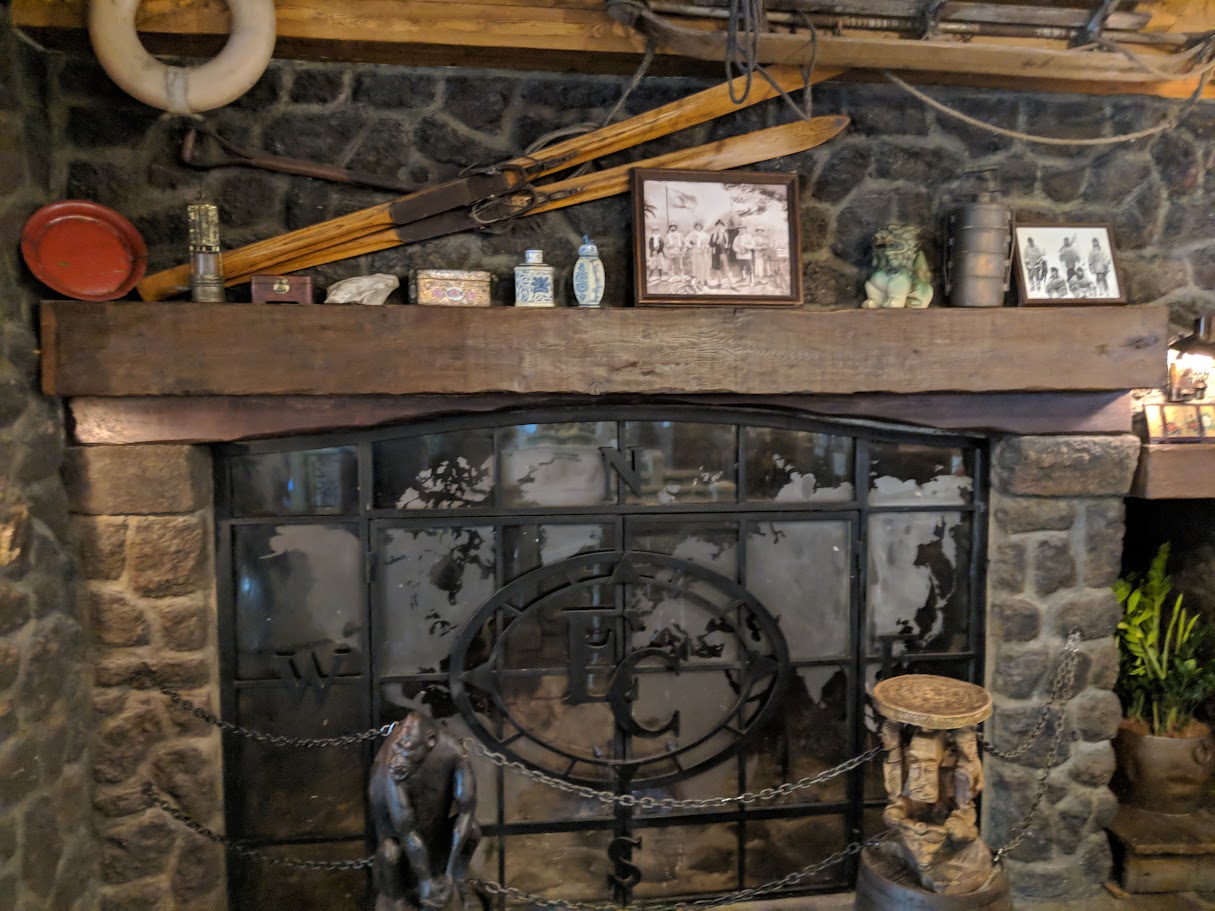

After 30 years, there are still references to the original Explorer’s Club inside the Colonel Hathi’s restaurant.
One persistent guest complaint was about the hamburgers served. The Americans in charge of food wanted massive “healthy” hamburger patties. Unfortunately, “healthy big burgers” are very lean, and their size means they were cooked for so long that they turned dry and tasteless. Philippe Bourguignon tested every burger across the resort and changed the beef recipe to make them moist and tasty. This was one of many examples where the disconnect between the guests and out-of-town management caused unnecessary issues. In regards to american staff members not taking orders from the French team, there was an example set where one staff member flew back to California in order to see Michael Eisner in regards to Philippe Bourguignon. That staff member was fired when he arrived in California and this was a strong reminder to respect the leadership in France and this allowed Philippe Bourguignon to continue his changes.
 ParkVault