Chance Rides
Chance Rides produced its first Sea Dragon swinging ship in 1979. Its dimensions were similar to the Huss Pirat and offered as both a permanent attraction bolted to a concrete base and a transportable ride like that one. Two trailers were necessary to travel with that ride, and with 50 riders per cycle, it was quite a profitable attraction for fairground operators. It soon found its way into many amusement parks in the US.
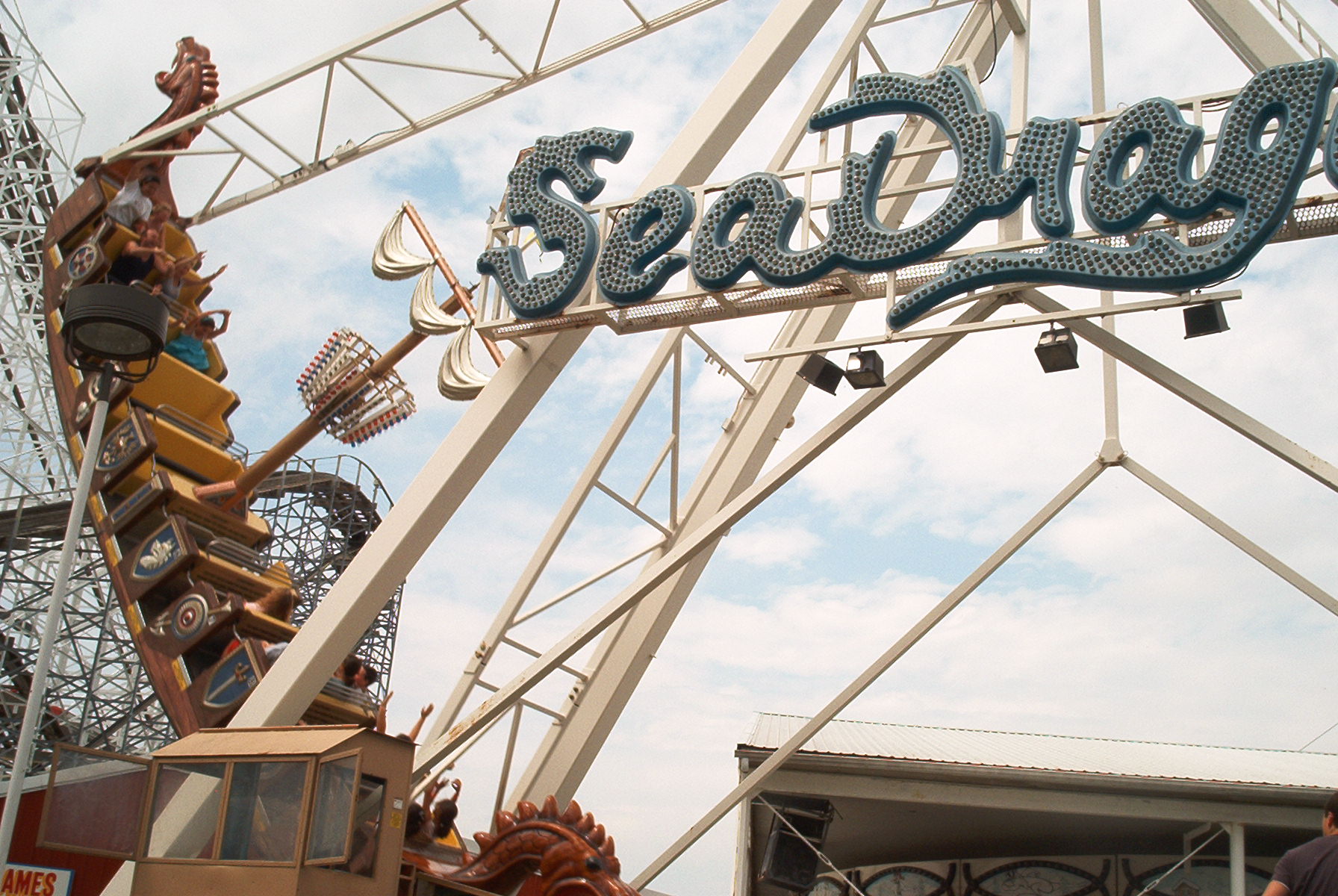
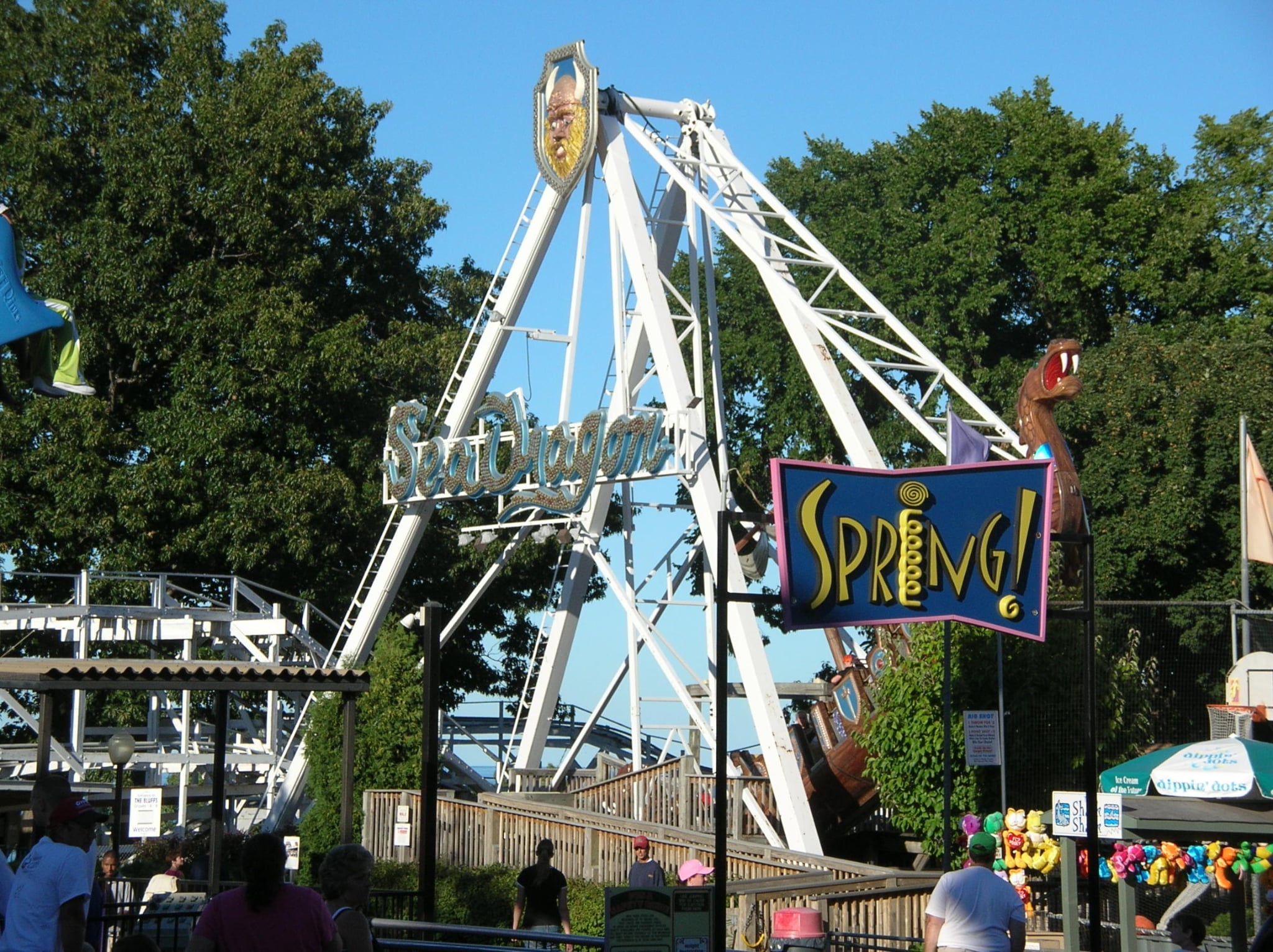
The Sea Dragon photo from Seabreeze appears courtesy of Mark Rosenzweig.
The Space Shuttle was a more compact and smaller Swinging Ship that premiered in 1981. One particular structural characteristic was that instead of an A-frame like many other swinging ships, the ride used a single vertical steel structure, similar to the Ranger/Traumboot ride. The boat, which only had 6 rows, was patterned after the American Space Shuttle, and the whole ride fit on a single trailer. This feature made it more economical to travel with compared with the more enormous Sea Dragon.

Later, Chance Rides came up with the Pharaoh’s Fury around the mid-1990s, making the Sea Dragon and Space Shuttle obsolete. It was similar in size to the Sea Dragon, with 10 rows on the boat, allowing four adults per row or six kids per row, depending on the desired height restriction. It was mounted on a single trailer, thus allowing the capacity of the Sea Dragon to be on a single trailer without the single heavy support column and the smaller capacity of the Space Shuttle. Its maximum operating angle when looking at the middle of the ship compared to the ground is 65°.
Intamin
Giovanola manufactured the Bounty, one of the first rides they produced for Intamin. The Bounty was offered as a dedicated permanent park attraction. It premiered in 1980, and Six Flags was an early adopter, installing one in every one of their property by 1981. At the time, Anheuser-Busch, owner of the popular Busch Gardens theme parks, ordered one for their Busch Gardens Williamsburg property, installed in 1980. The Bounty uses a pair of wide drive tires in the middle of the loading platform area to provide motion. The ride’s frame is slightly shorter than the Huss version at 44 feet tall (13 meters) and reaches 62 feet (19 meters) at its maximum 75° angle swing.
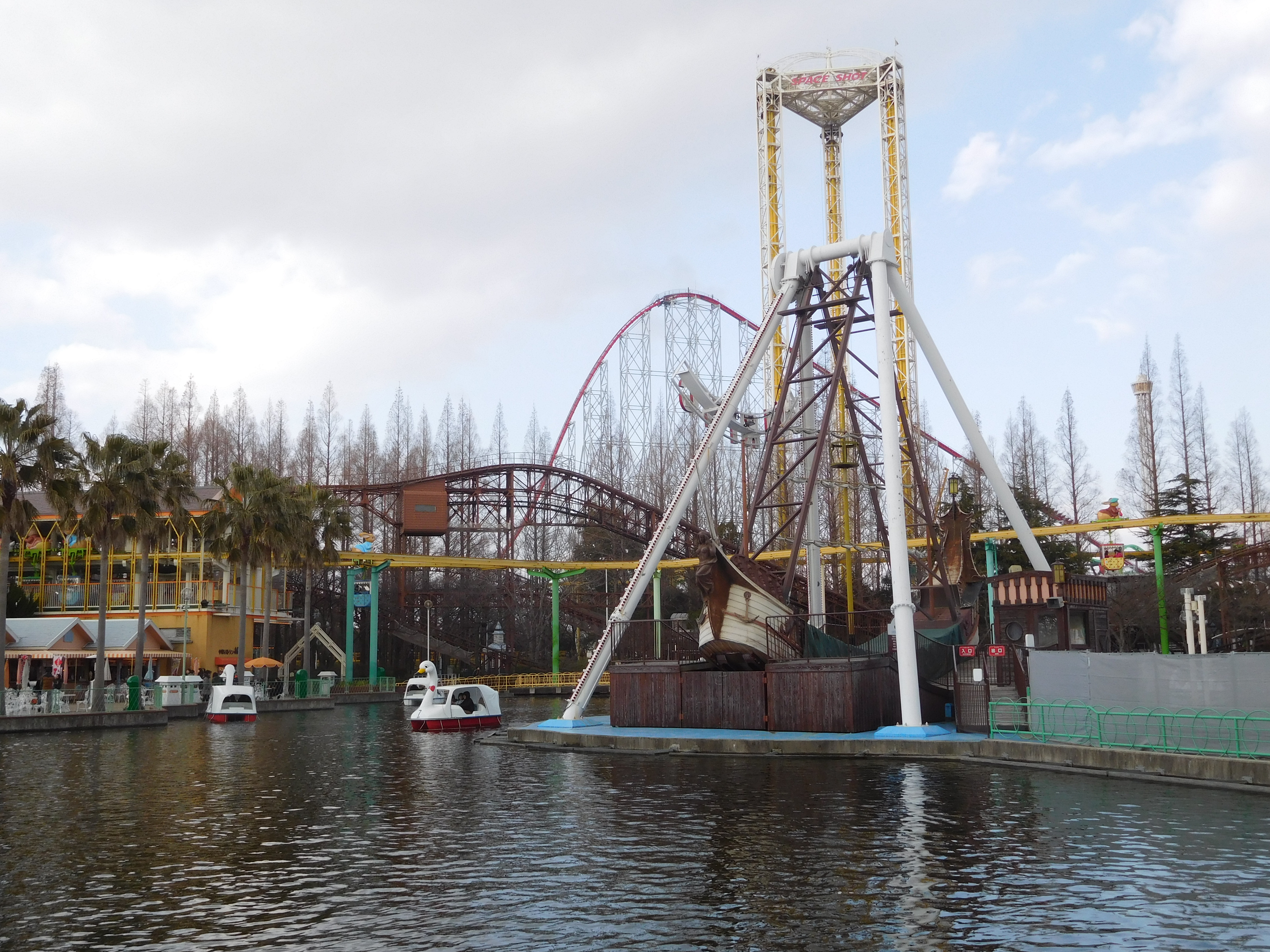
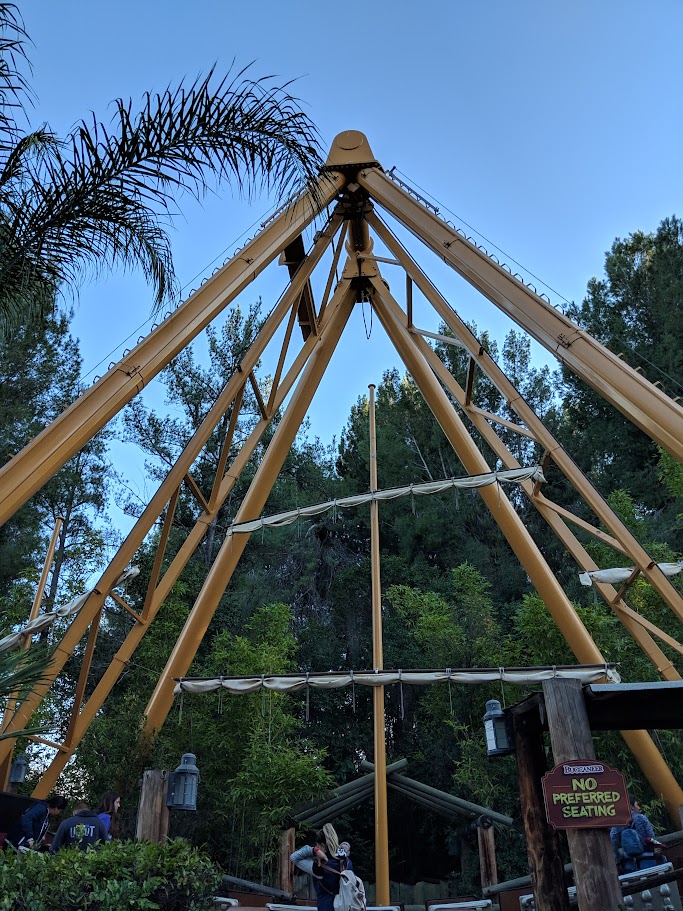
The ride restraint system is more kid-friendly than any other full-sized swinging ship on the market. Two ground-mounted steel lap bars are in each row, with one bar for 3 riders and the other for two. Those allow kids 36″ (0.92 meters) and higher to ride with a responsible adult, making the ride a lot more accessible for younger riders. The Huss Pirate is certified for kids 41″ tall (1,10 meters). Still, parks will often have a much higher height restriction. La Ronde in Montreal, Canada, for example, demanded that kids be 52″ (1.32 meter) tall to ride the Bateau Pirate (Pirate Ship), which was only lowered to 48″ (1.22 meter) when Six Flags took over the park.
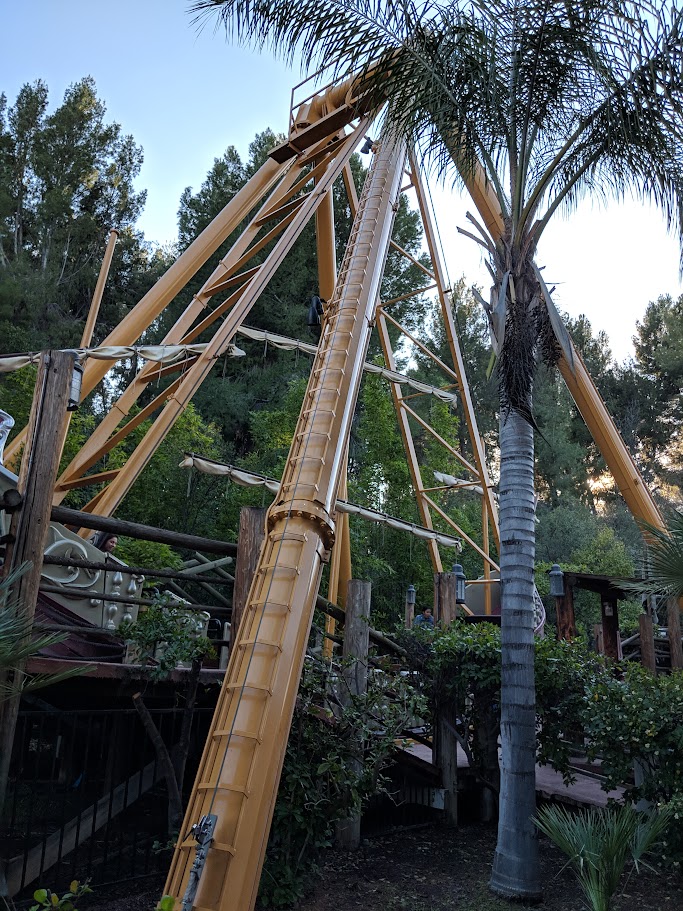
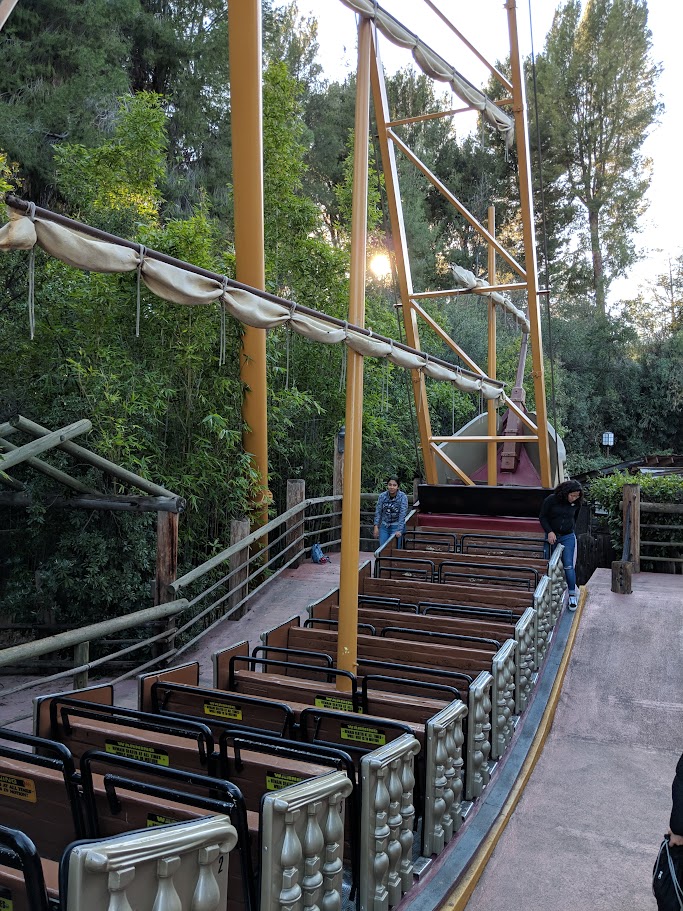

A further evolution of the Swinging Ship premiered in 1982 when Intamin designed the Super Bounty. The ride structure stands an impressive 67 feet tall (20.5 meters), and the boat is capable of reaching 79 feet (24 meters) in the air when in full swing. The 75° angle is calculated when the boat lattice hanger (from where it hangs from the frame) reaches that angle, not the end of the boat.
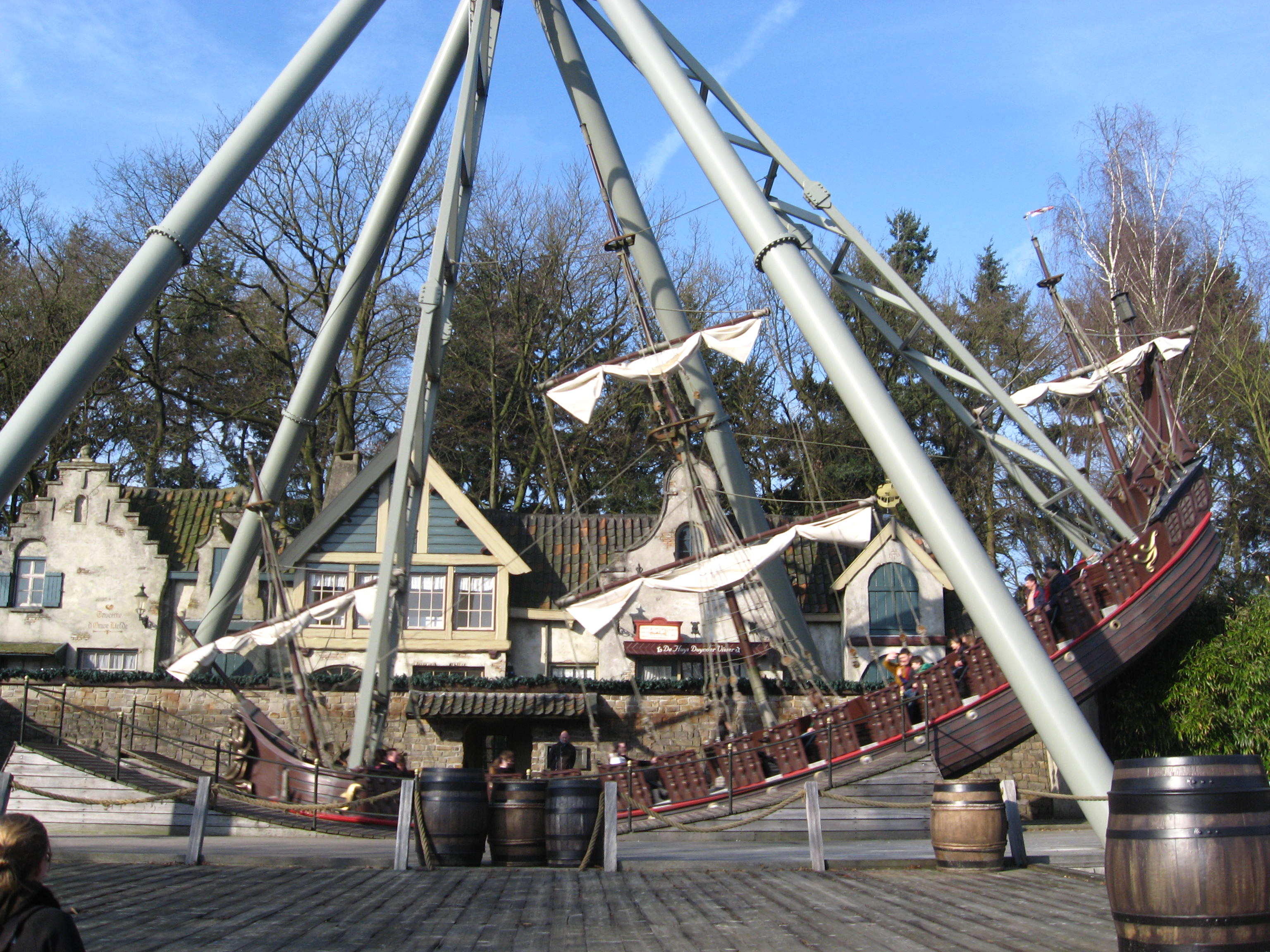
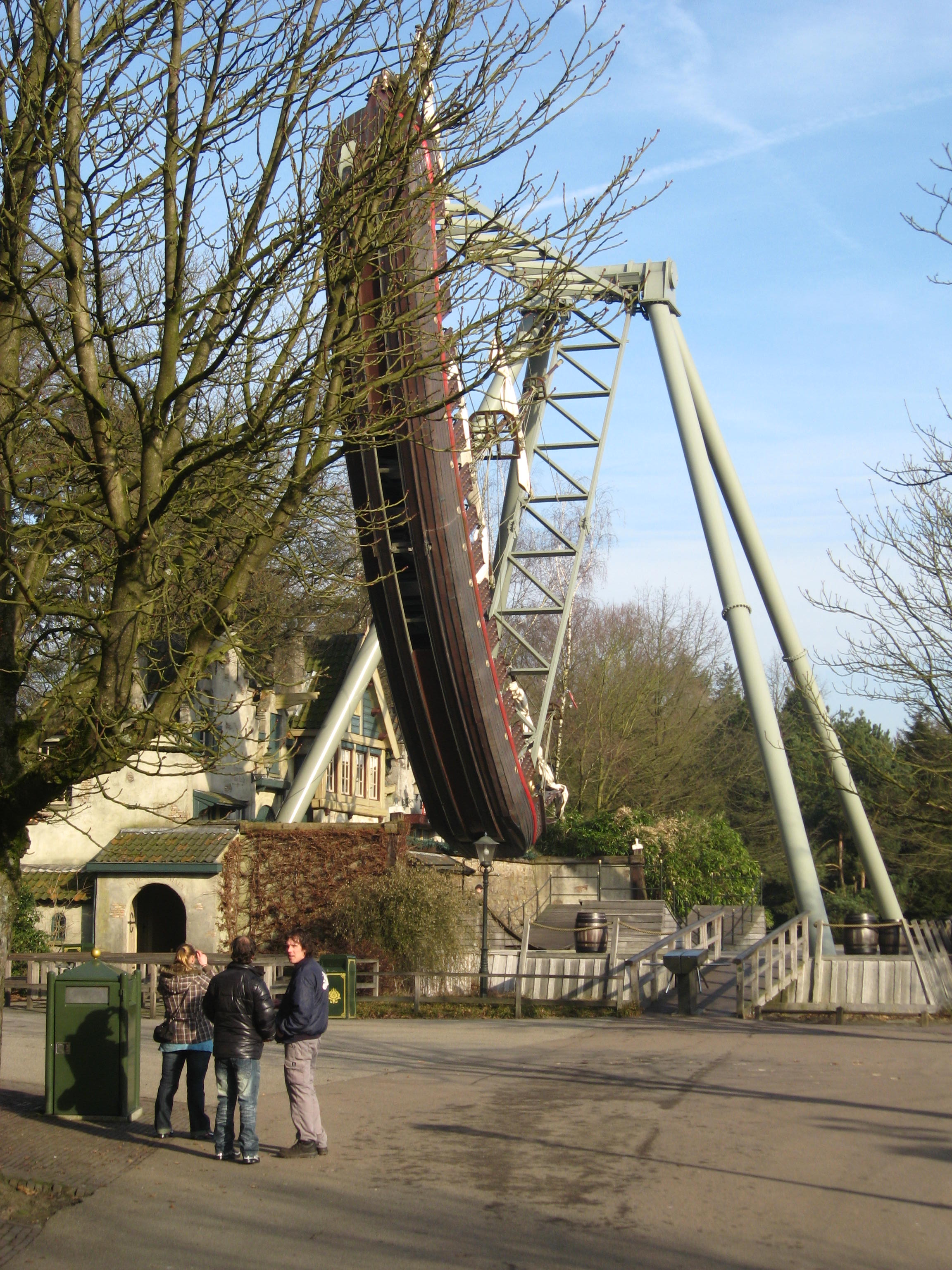
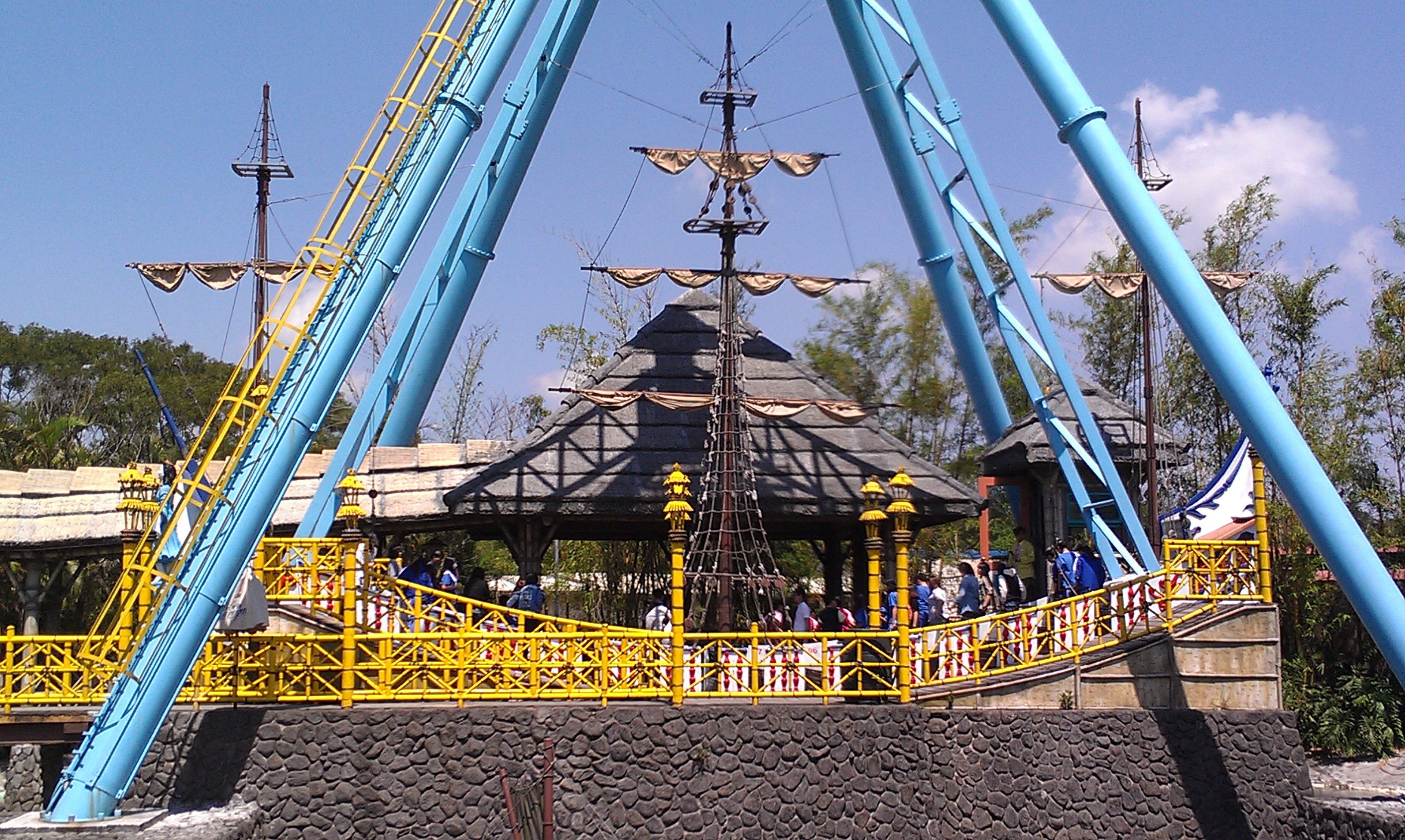
Those boats are larger than the standard Bounty, with room for 70 to 85 riders per cycle. As the boat is much heavier and longer, Intamin installed two pairs of drive tires to provide motion to the boat. Kings Island (Mason, OH) and Efteling (Kaatsheuvel, Netherlands) opened the first two in 1982. Since then, a handful of parks in Asia have added them when the ride’s large capacity was critical.
In 1985, Intamin opened its first “Looping Starship” to Busch Gardens Tampa (Tampa, FL) and Kings Dominion (Doswell, VA). Those took the Bounty concept over the top literally, as a massive concrete and steel counterweight sits at the opposite end of the ride vehicle. Thus, Careful programming allowed the boat to go upside down using drive tires similar to the Super Bounty’s.
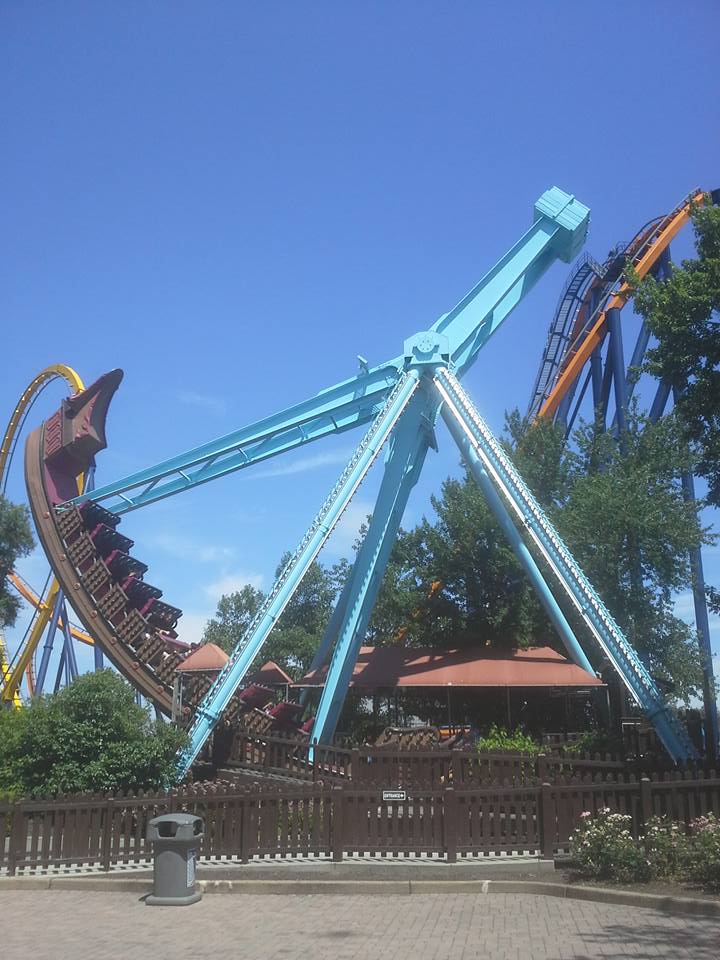
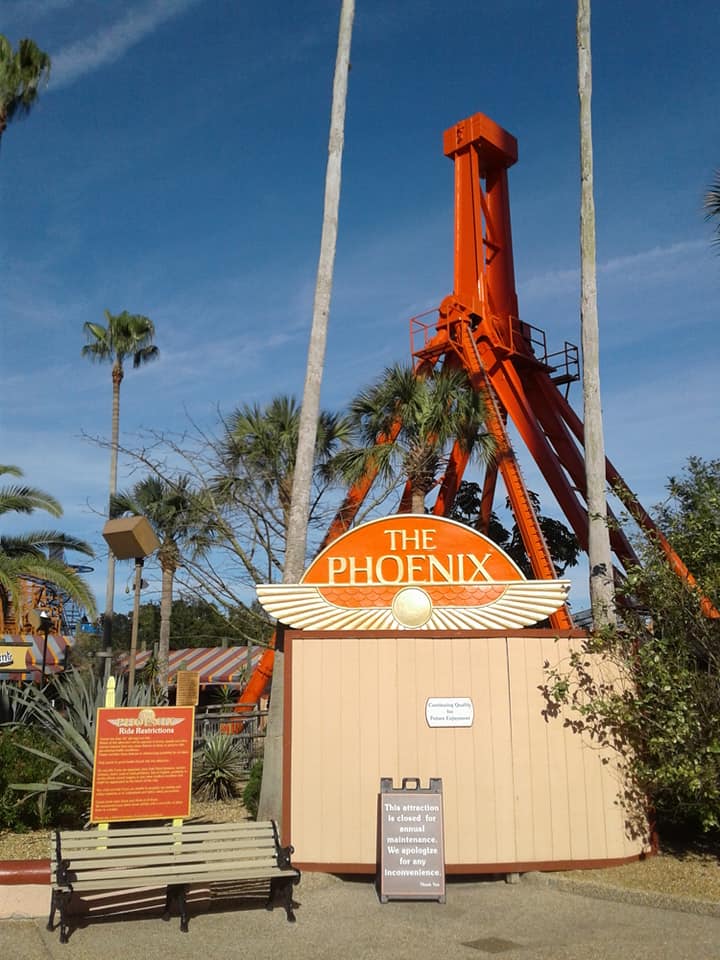
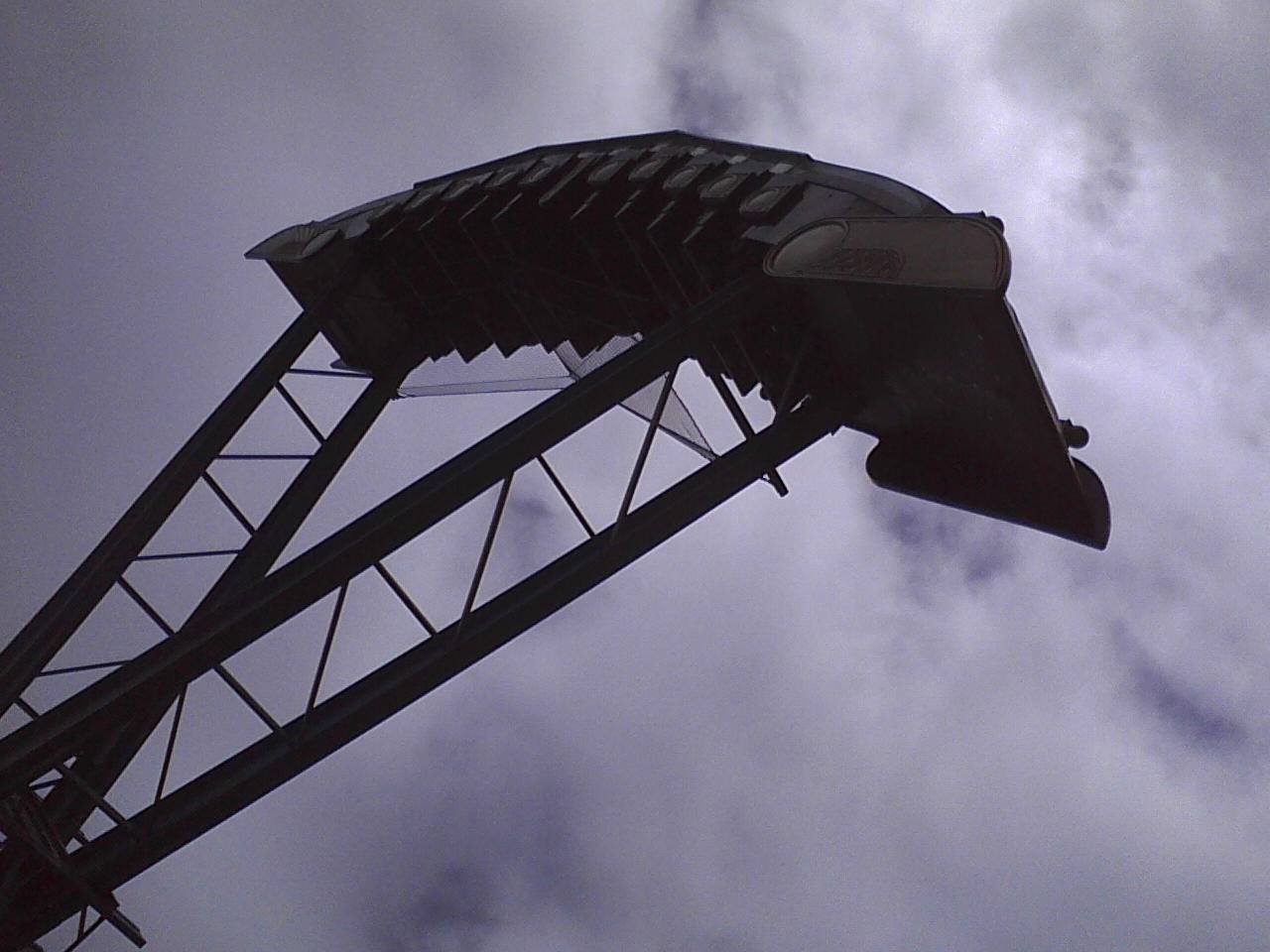
The boat has 10 rows of five, all facing the center of the boat or space shuttle, depending on what theme the operator settled on. As guests would hang upside down, the old restraints were insufficient. Shoulder bars would rotate down on riders automatically, followed by a massive bar to push on those and provide redundancy. Unfortunately, it could be quite a painful experience for riders due to the pressure.
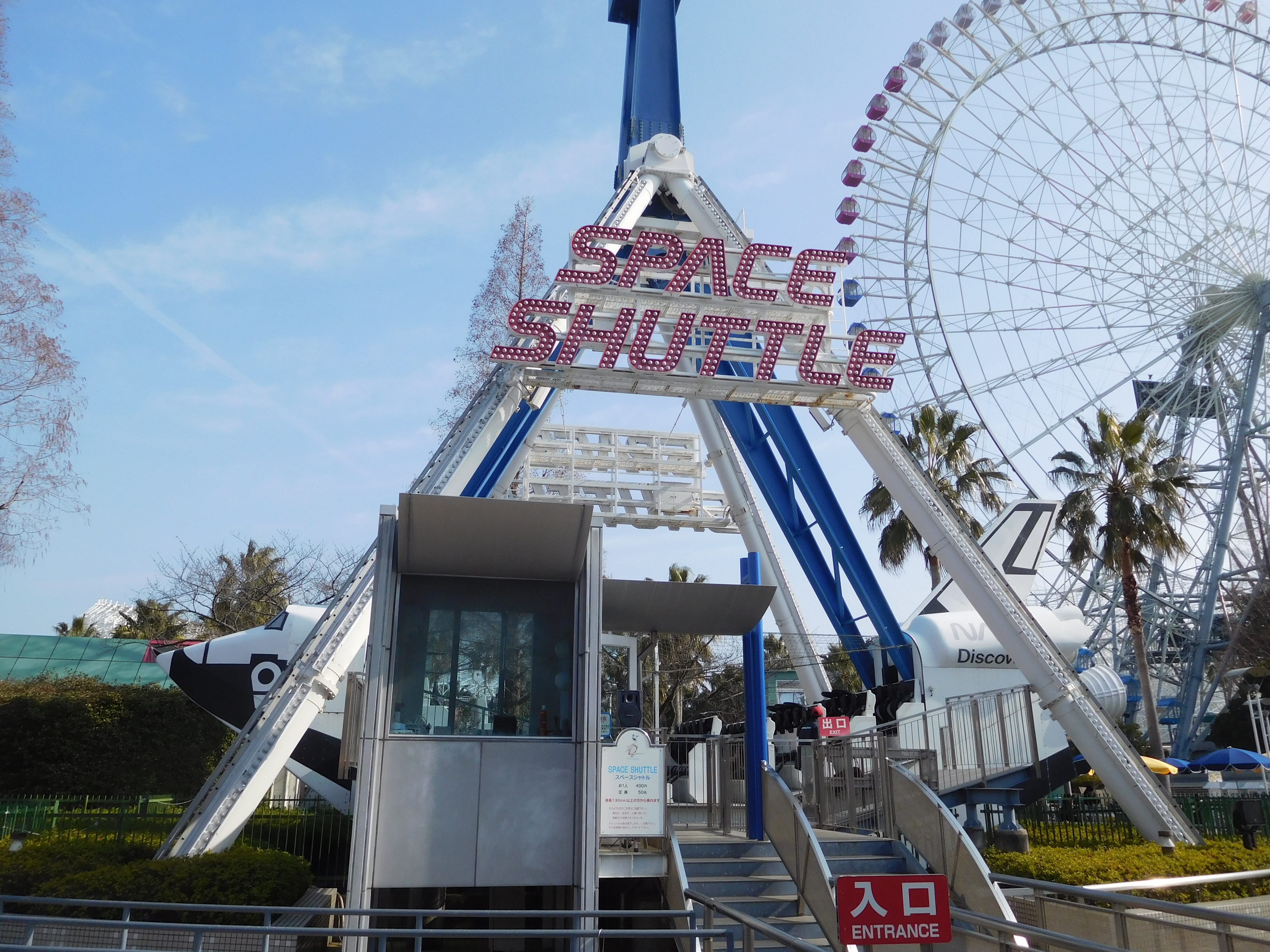
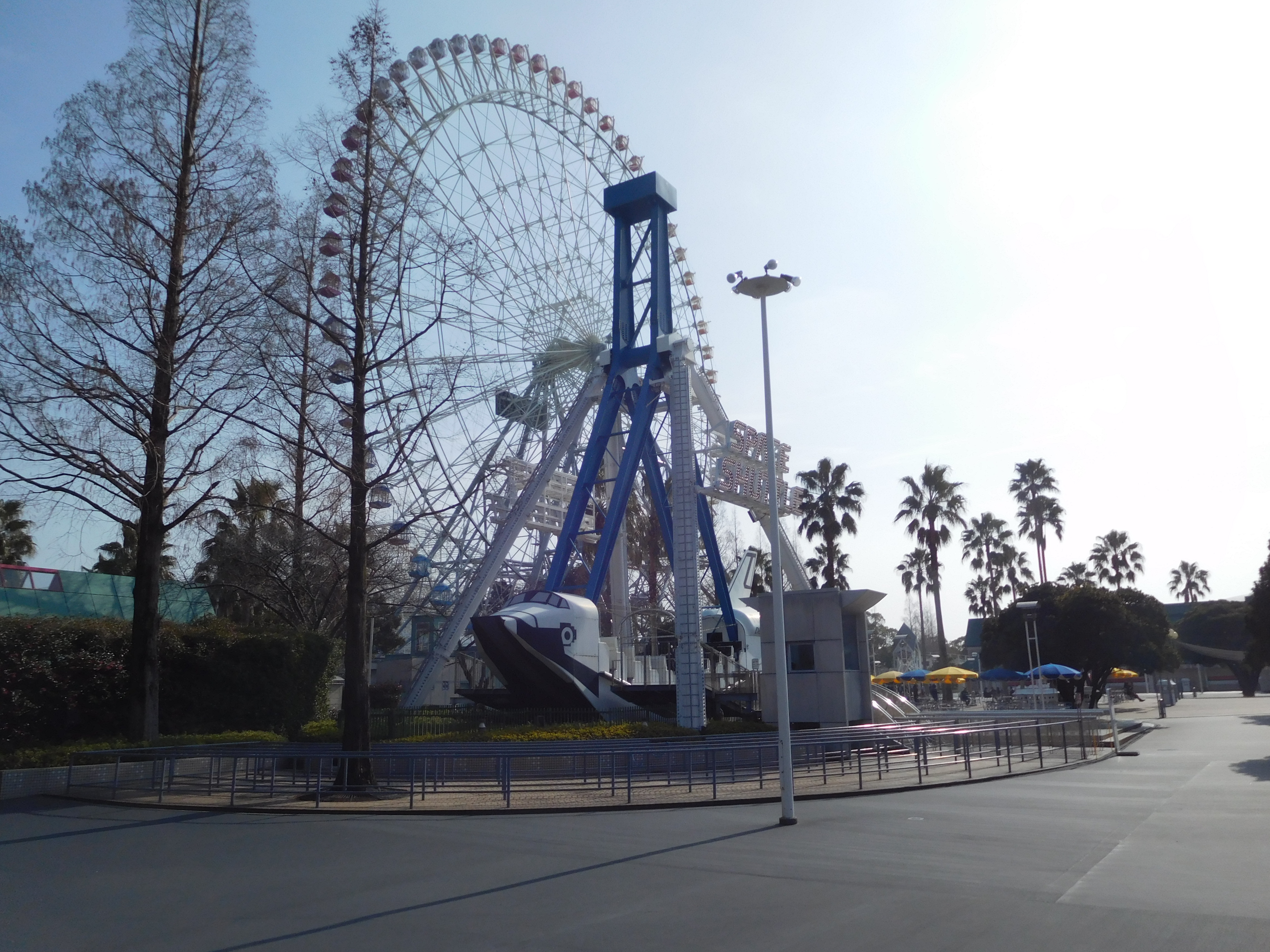
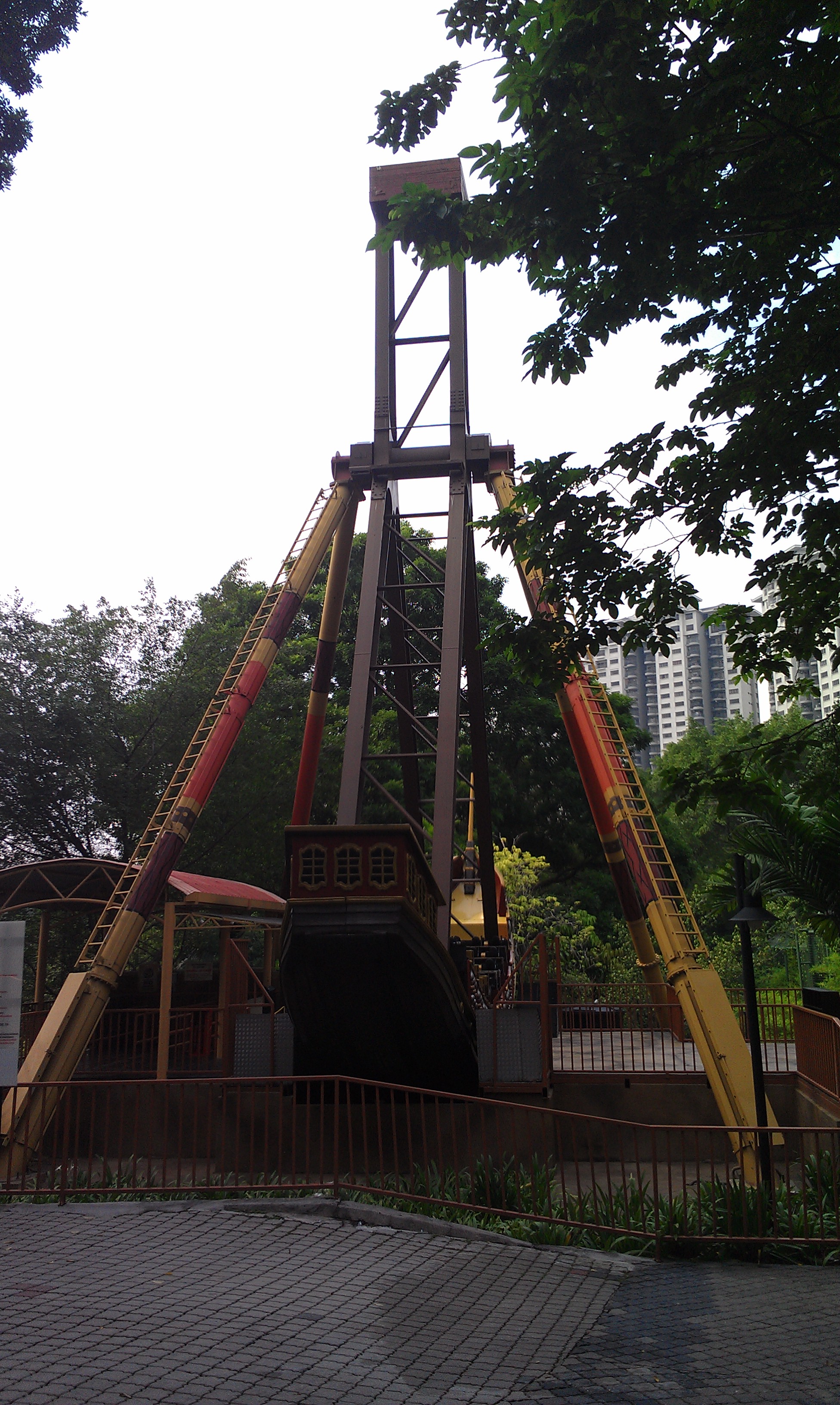
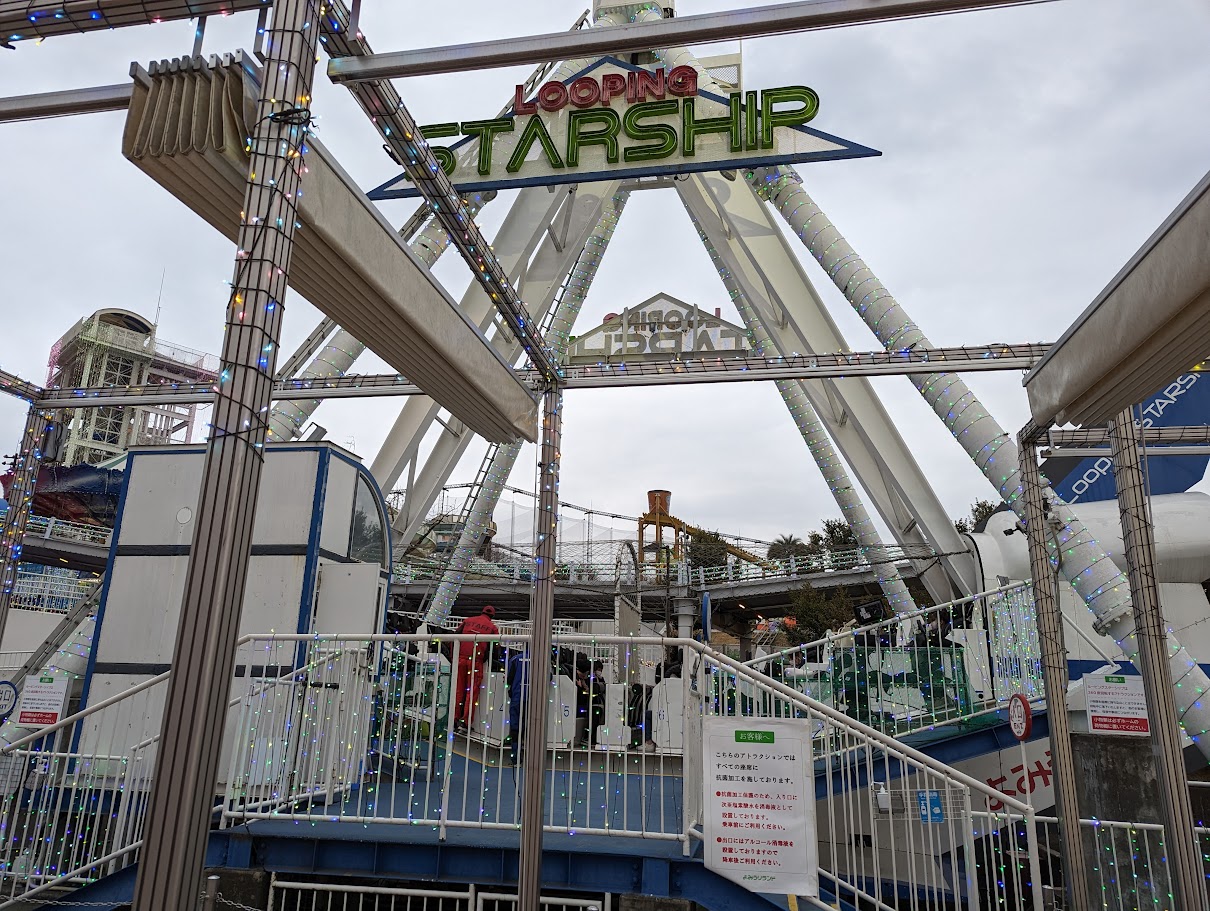
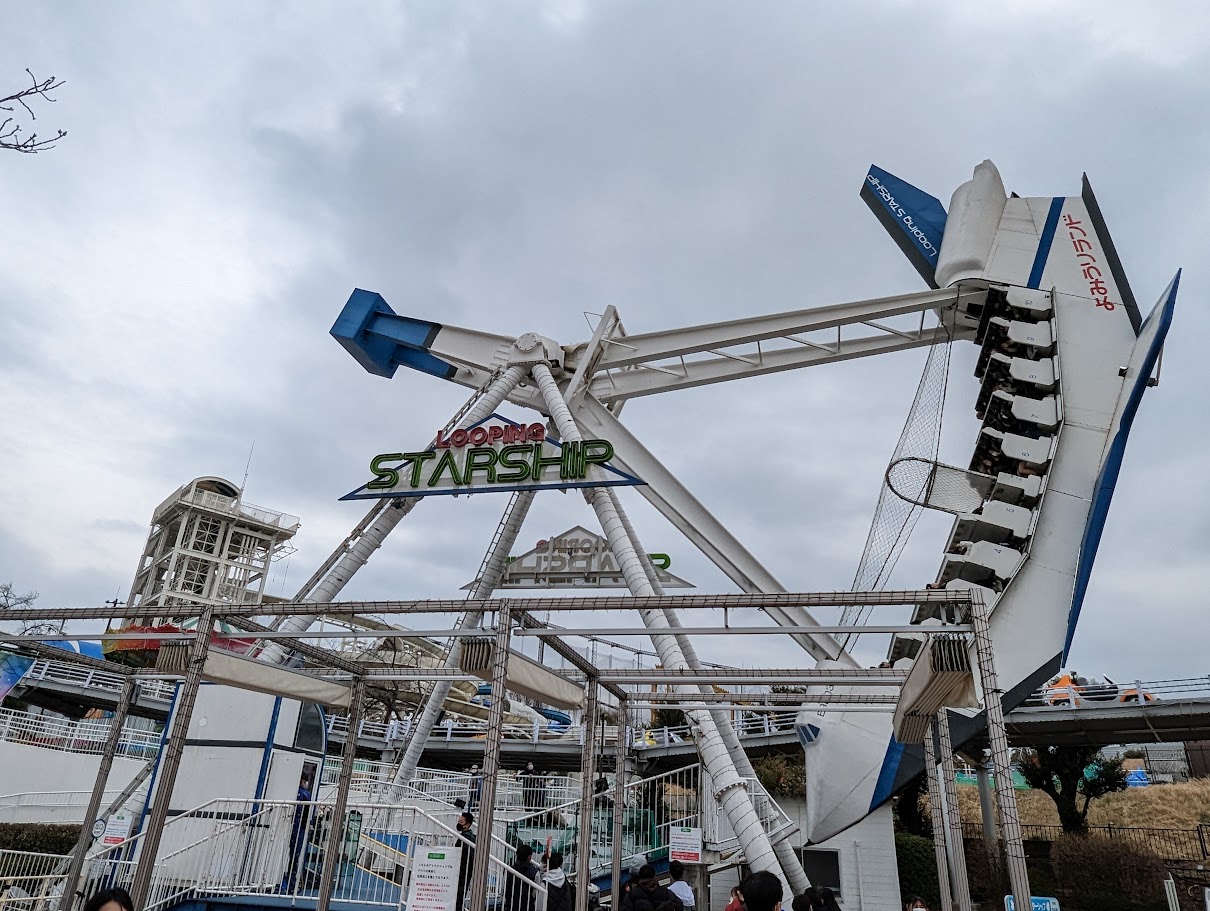
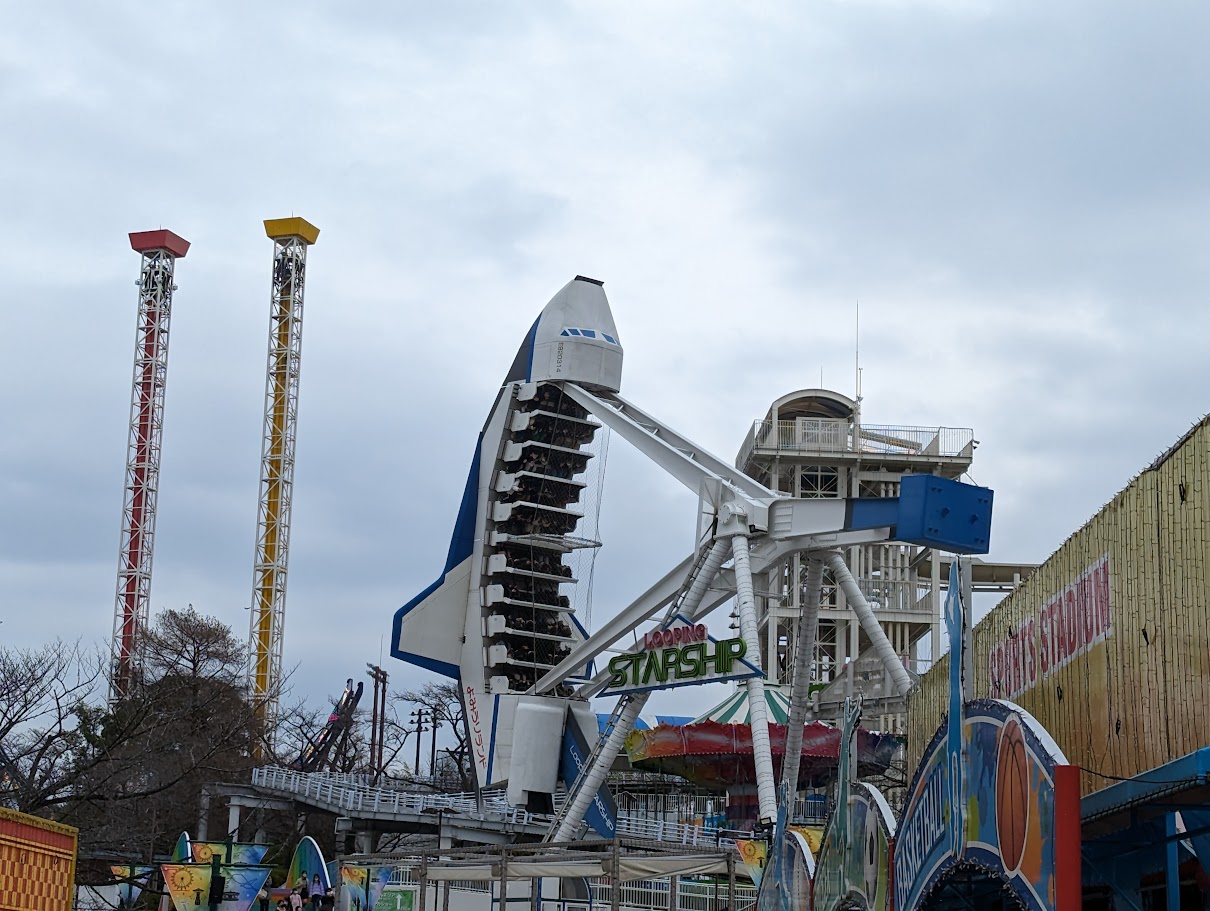
Those rides saw many installations at Six Flags parks and elsewhere in the world in the 1980s but were quickly removed in the 2000s and after as their popularity waned and more efficient versions came on the market. The photos above show the last 3 operating Looping Starship in the world.
1985 saw Nagashima Spaland open the first Twin Flying Bounty. The 131-foot tall frame (40 meters) supports two giant ships that can swing up to 141 feet in the air (43 meters). Each boat has room for 160 riders, thus providing a mind-boggling hourly capacity of 5600 riders per hour when the ride runs both sides.
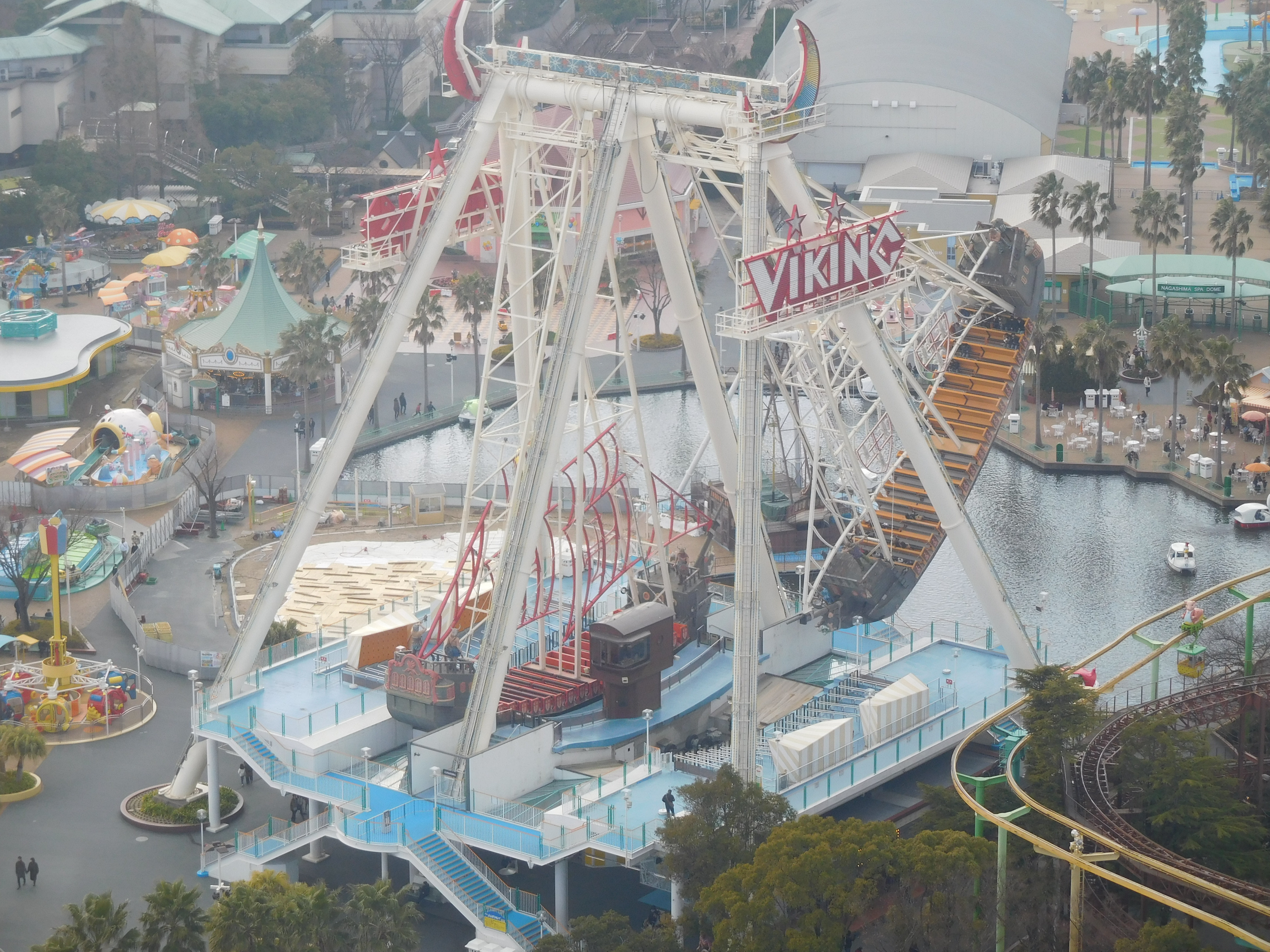
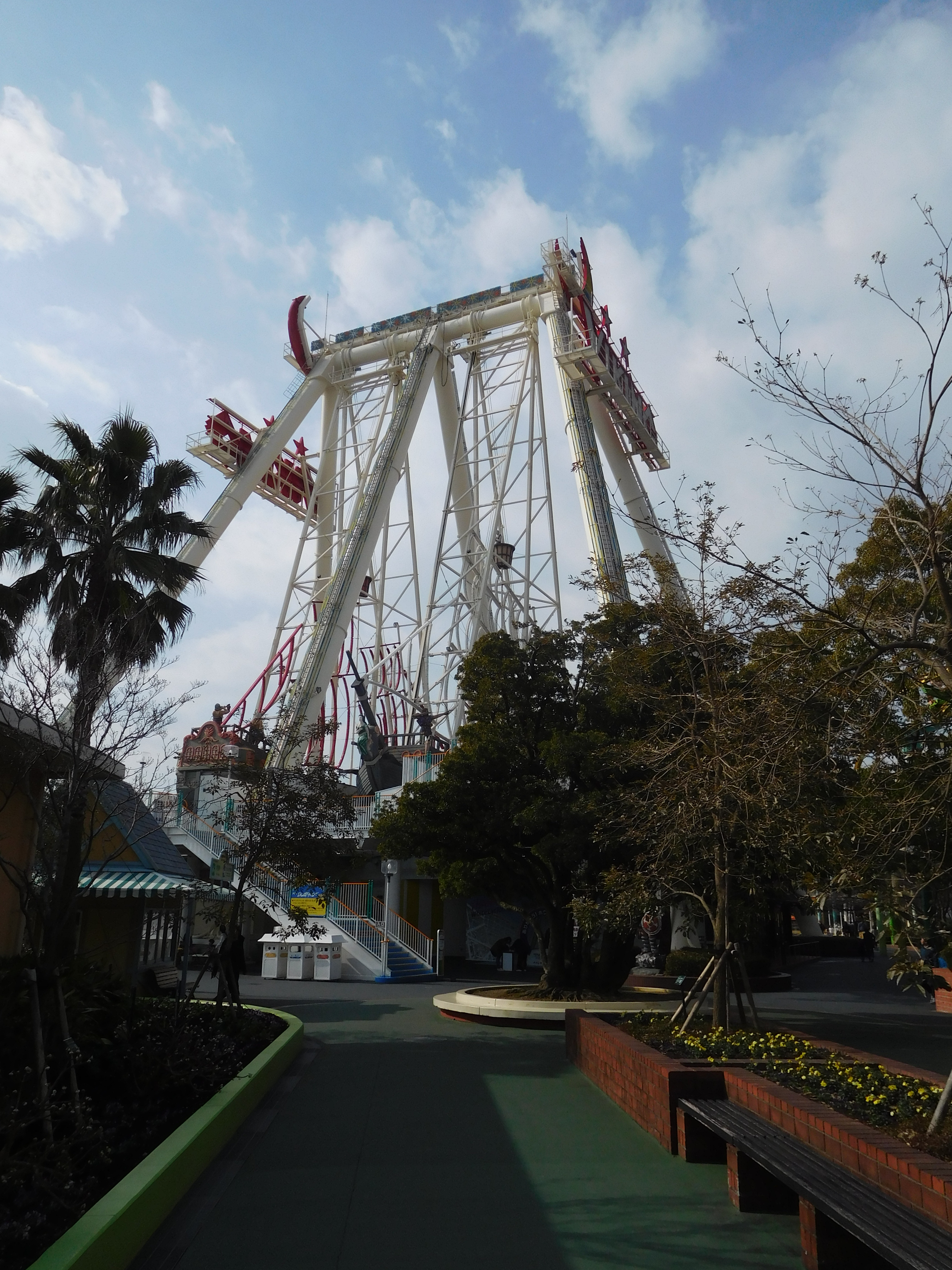
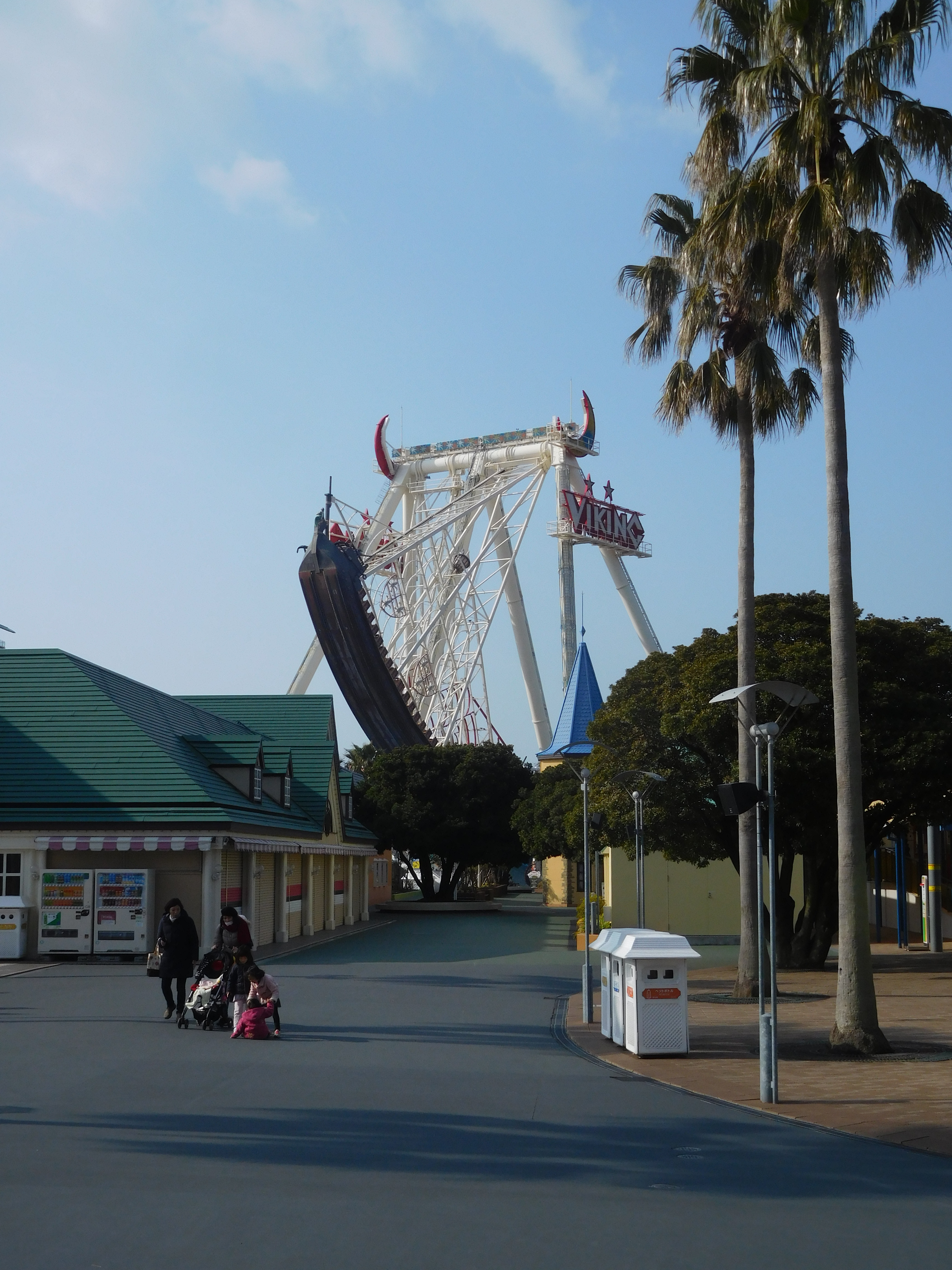
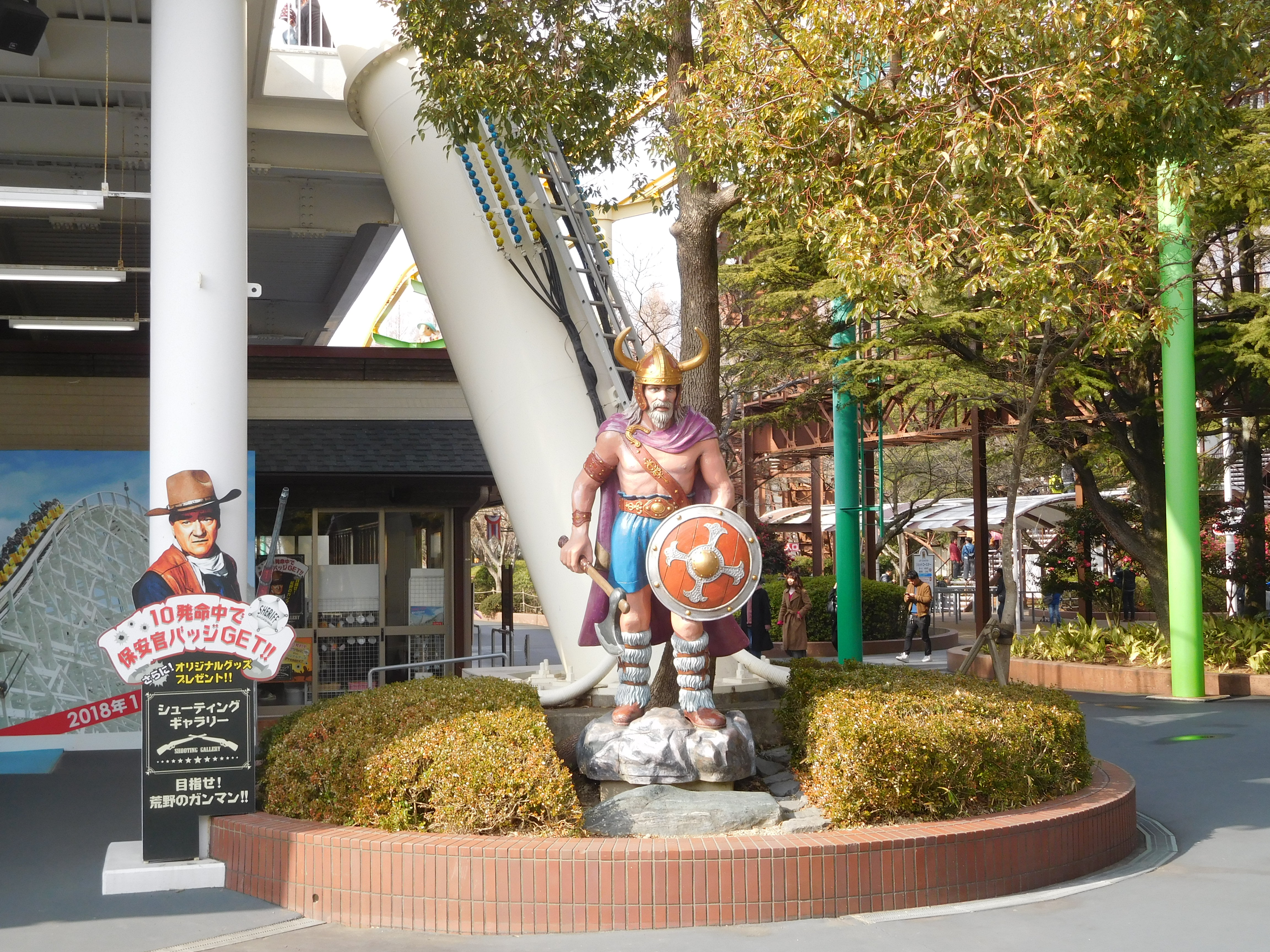
Zamperla
The Galleon was the first Swinging Ship to come out of Italy and was offered in three sizes by Zamperla, depending on the budget and size requirements of the client. 33 seats, 42 seats, and finally, 54 seats for the largest version.
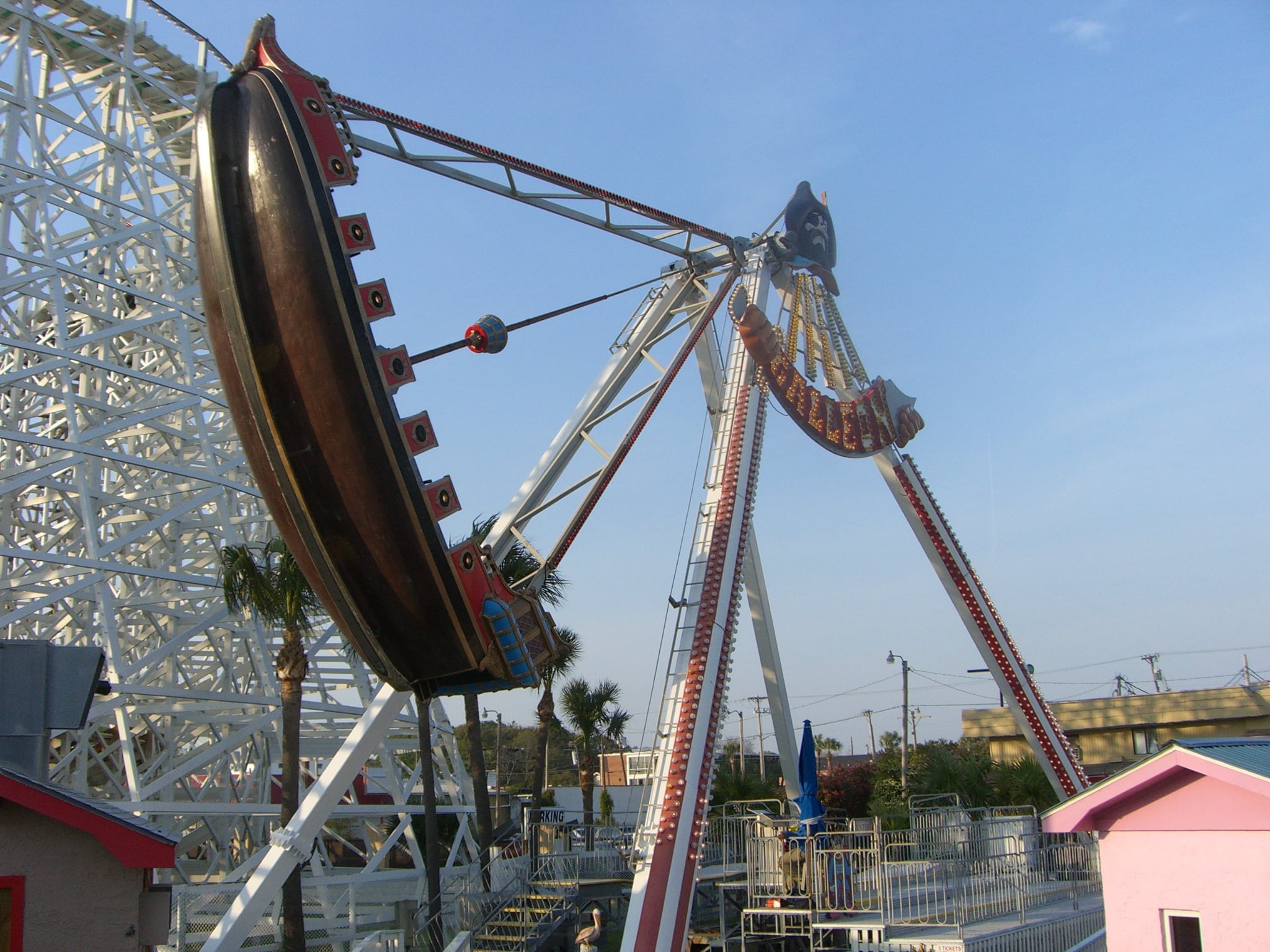
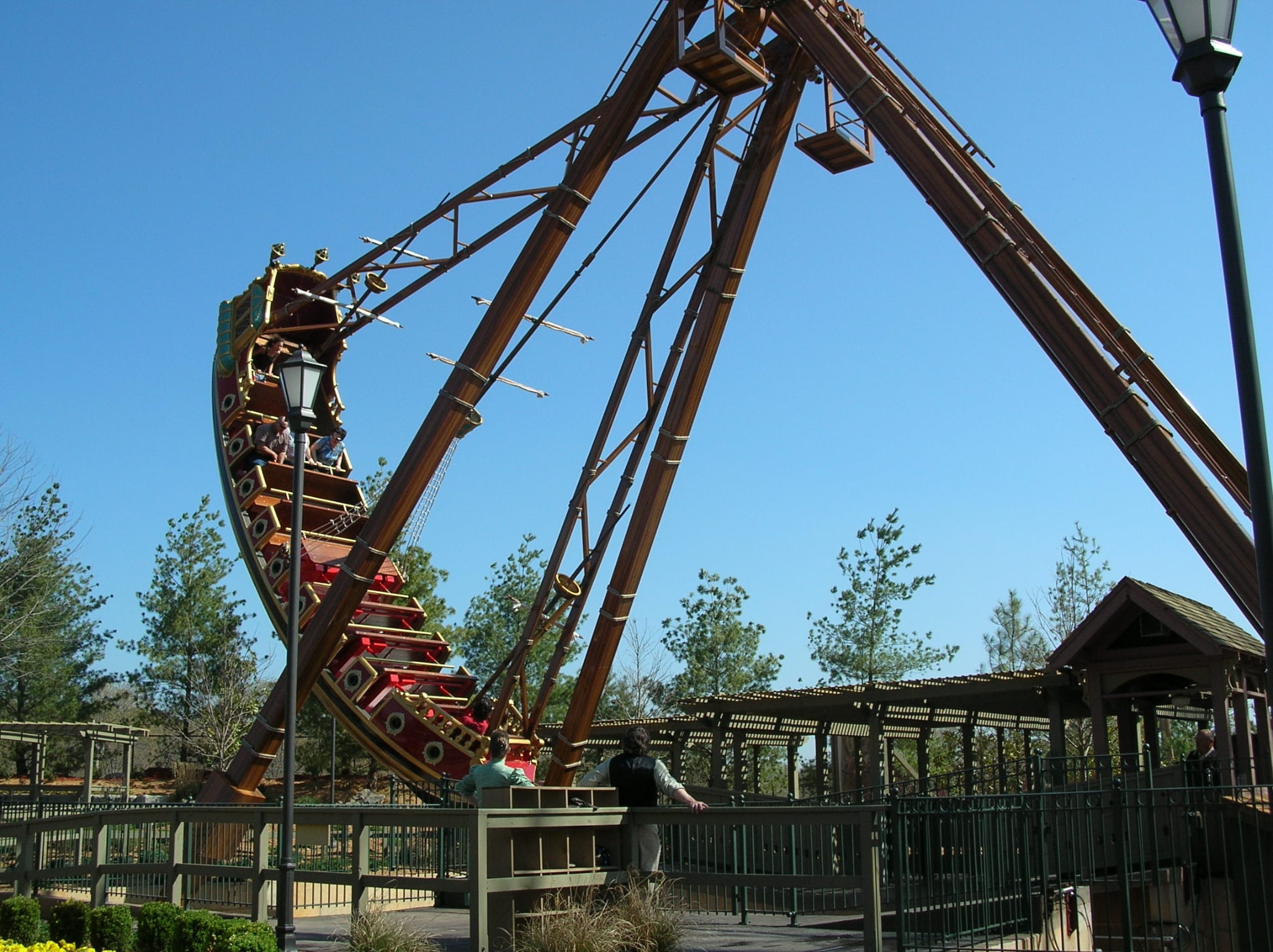
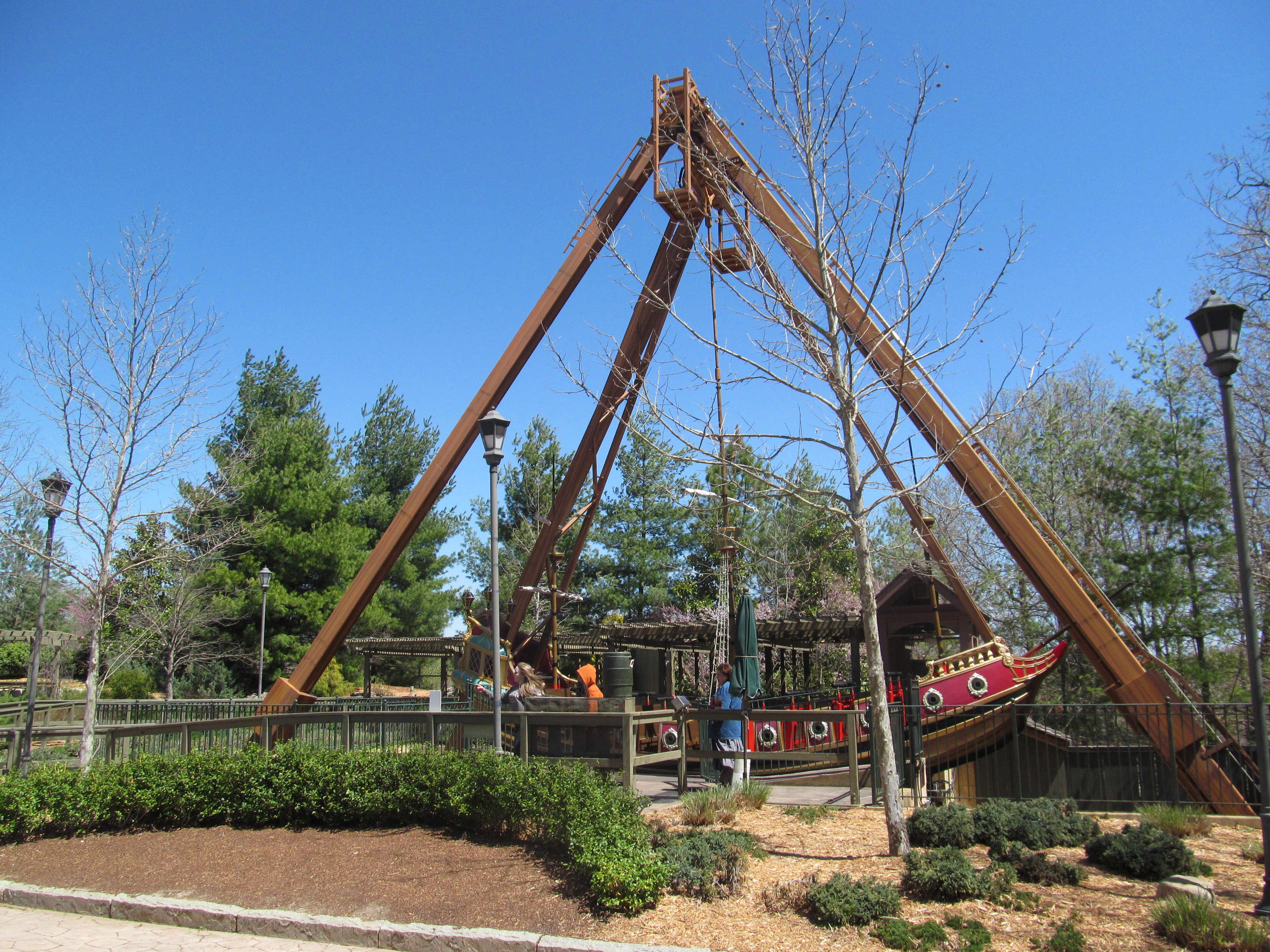
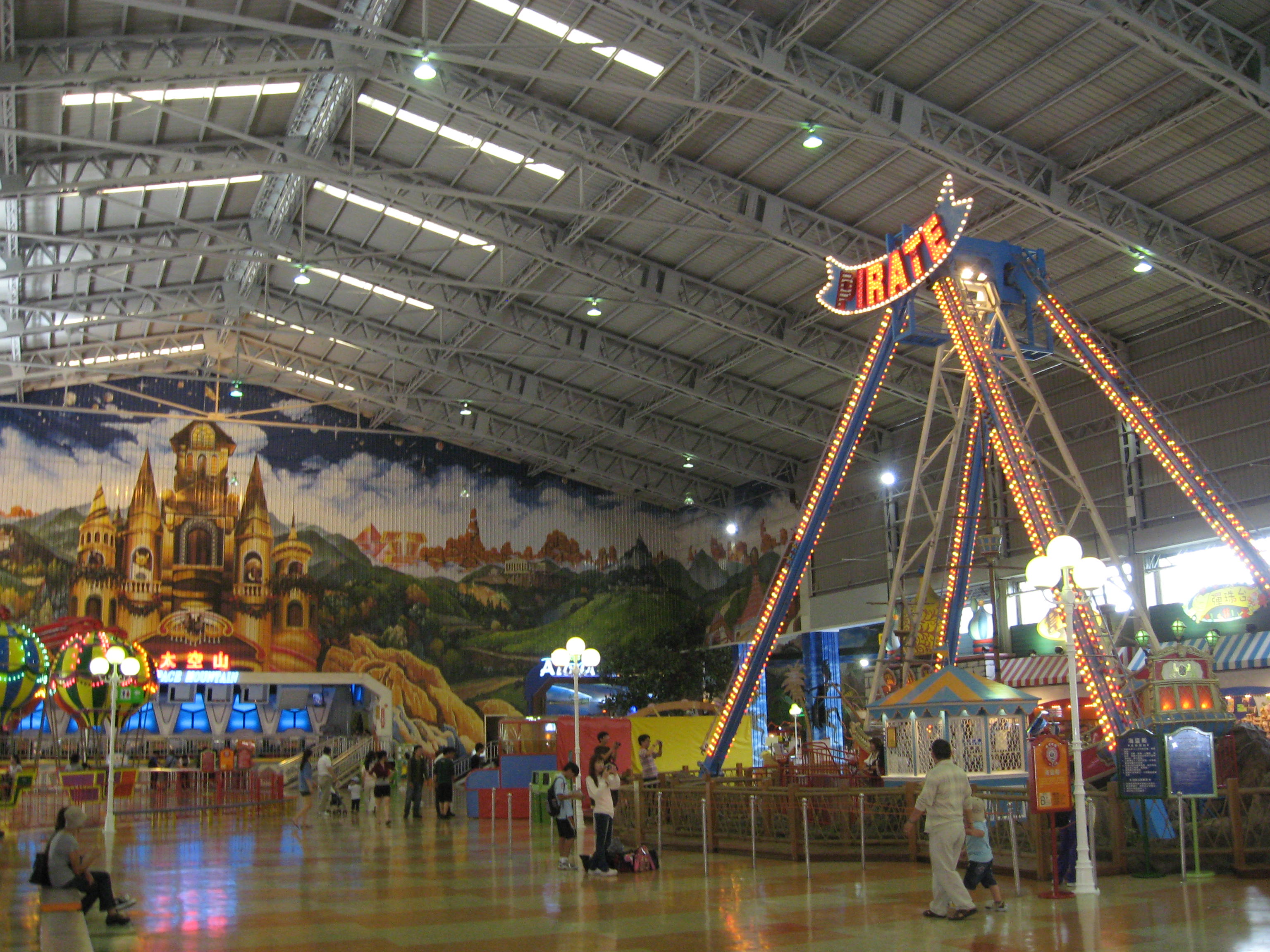
They were designed to fit on a single trailer for the transportable version, which was quite efficient and made it more desirable for carnival operators than the Huss and Chance versions. A park version was also introduced to the market, and quite a few indoor installations were sold where the smaller version fit better. Galaxyland at the West Edmonton Mall in Canada saw one of the first permanent installations in 1985.
Other suppliers
Today, most flat ride manufacturers offer a variation of the Swinging Ship. Their size and restraints may vary, but they all start from the same principle. Here are some examples from different manufacturers.
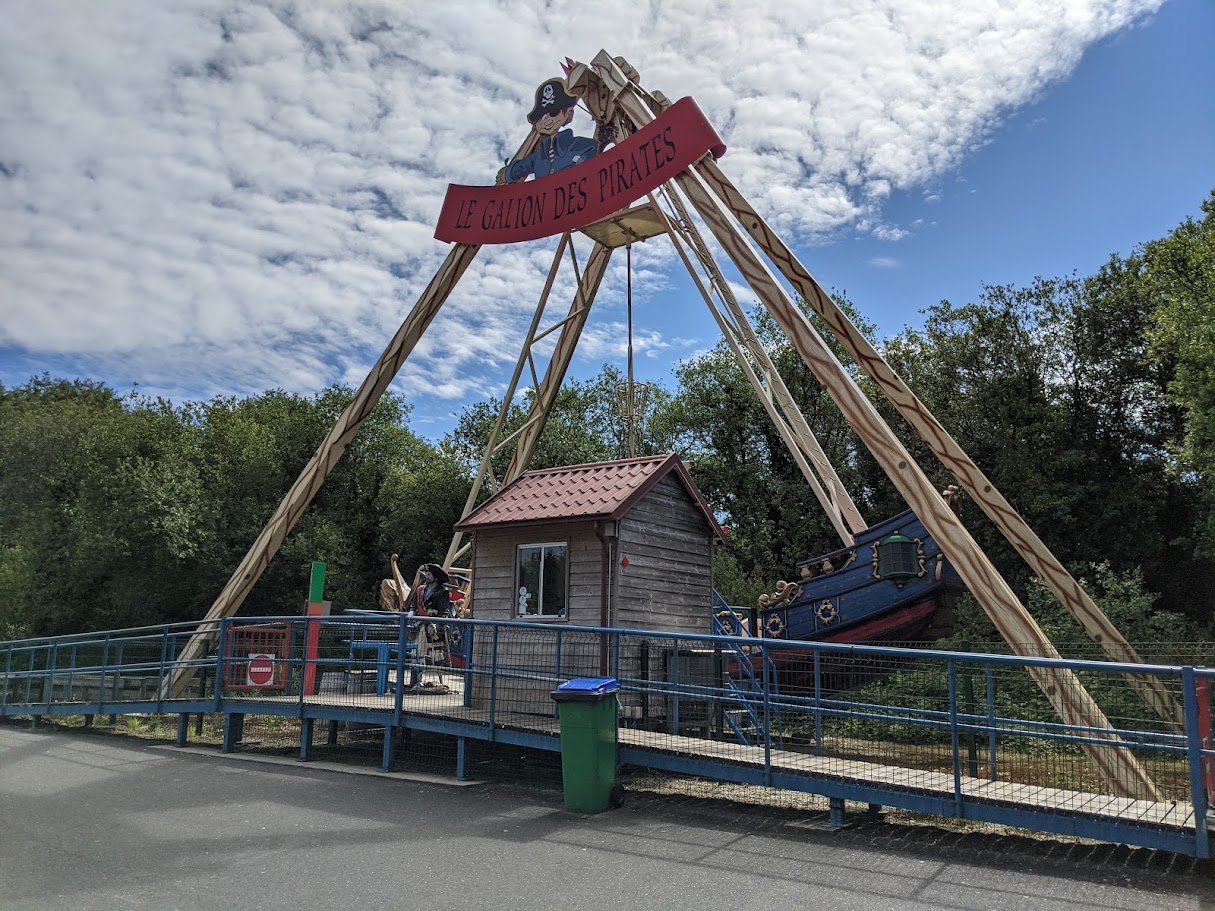
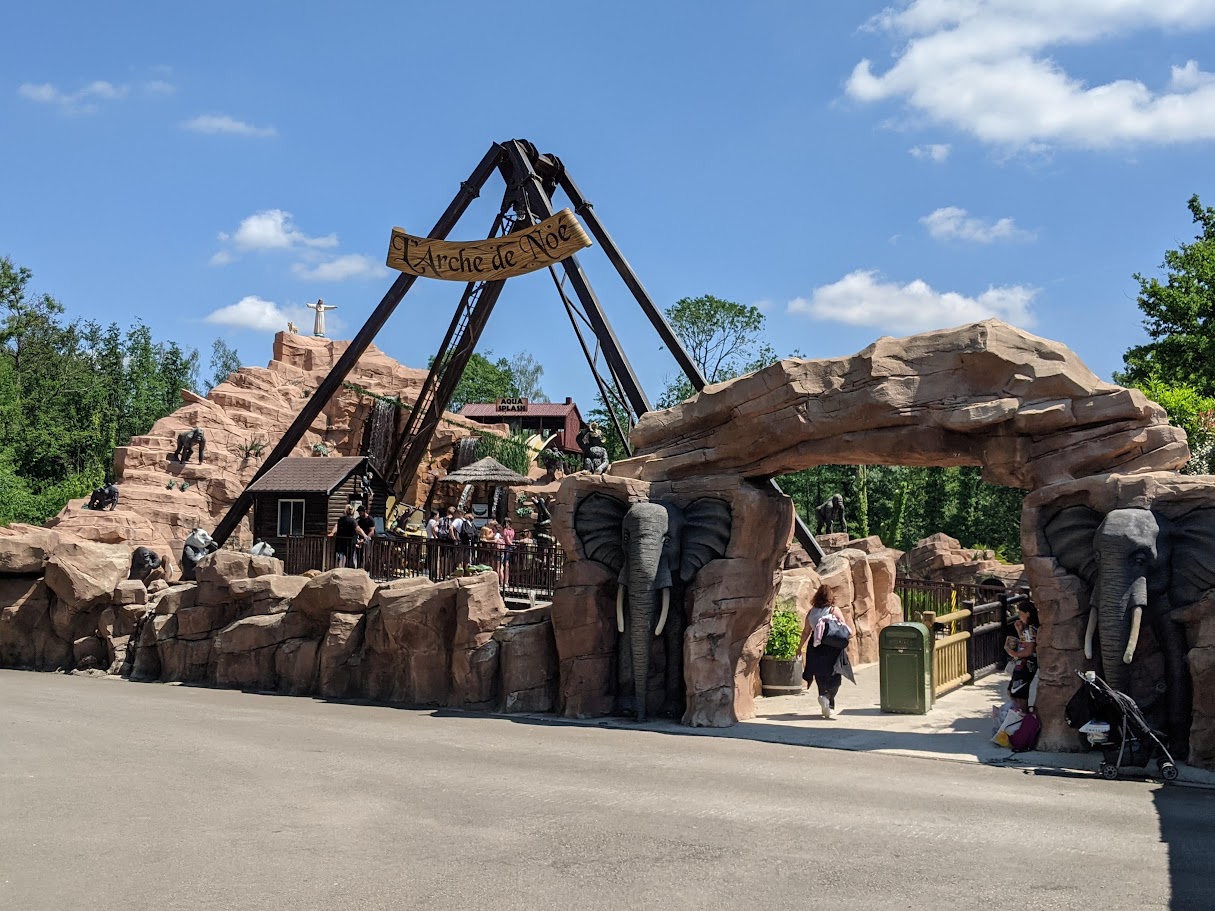
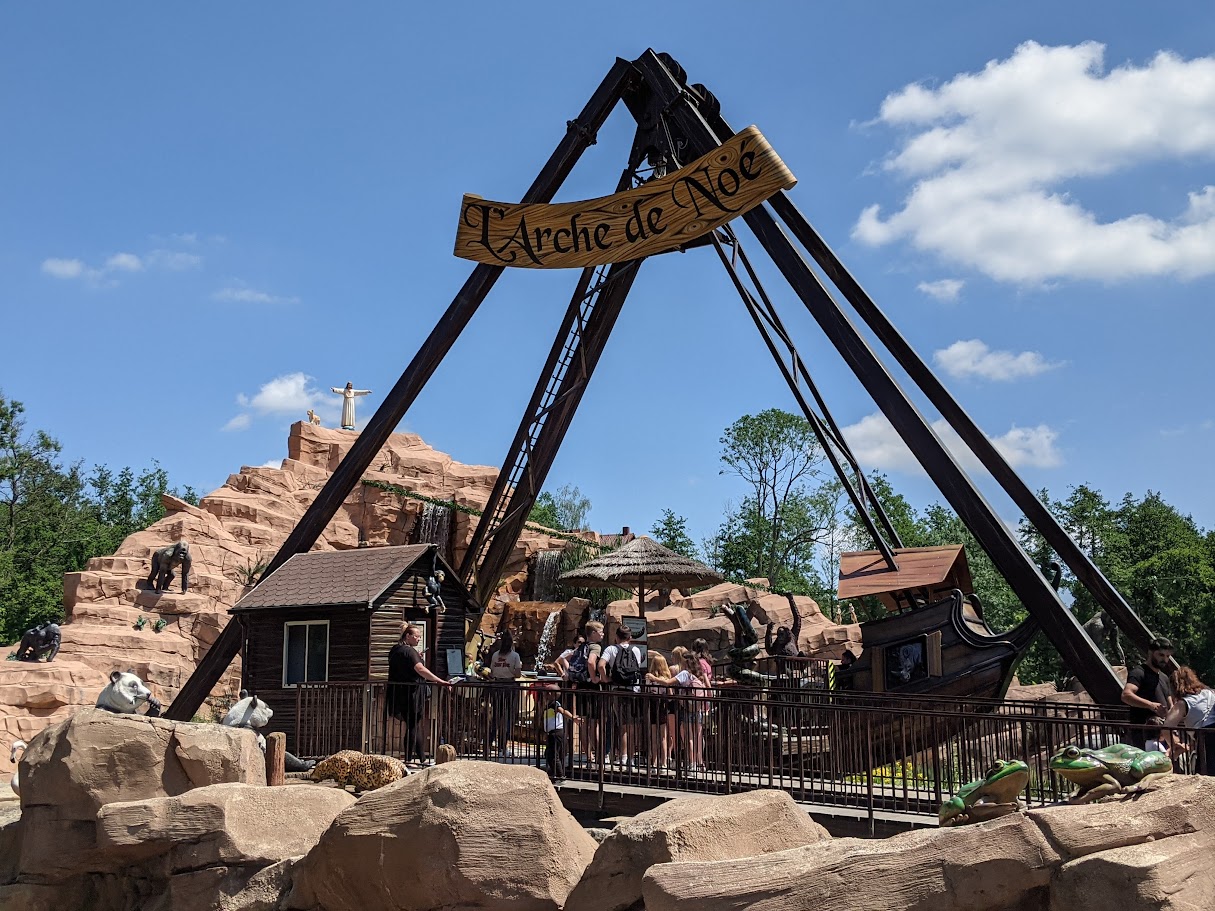
The 3 photos above show the Sindbad/Santa Maria line of Swing Boats commercialized by Metallbau Emmeln from Germany. They are robust, high-quality attractions that are popular in Europe right now. The Sindbad is a smaller boat with 24 seats and is 26 feet tall (8 meters). The Santa Maria is 36 feet tall (11 meters) tall with 42 seats on the boat, which is the model shown in both installations pictured above. Ride Entertainment represents Metallbau Emmeln in the US: https://rideentertainment.com/

SDC was an amusement park supplier from Italy that was very popular in the 1970s-1980s with their line of compact steel roller coasters and various flat rides. The Pirata seen here at Canobie Lake Park (Salem, NH) is an example of their version of the swinging ship. This one opened in 1986.
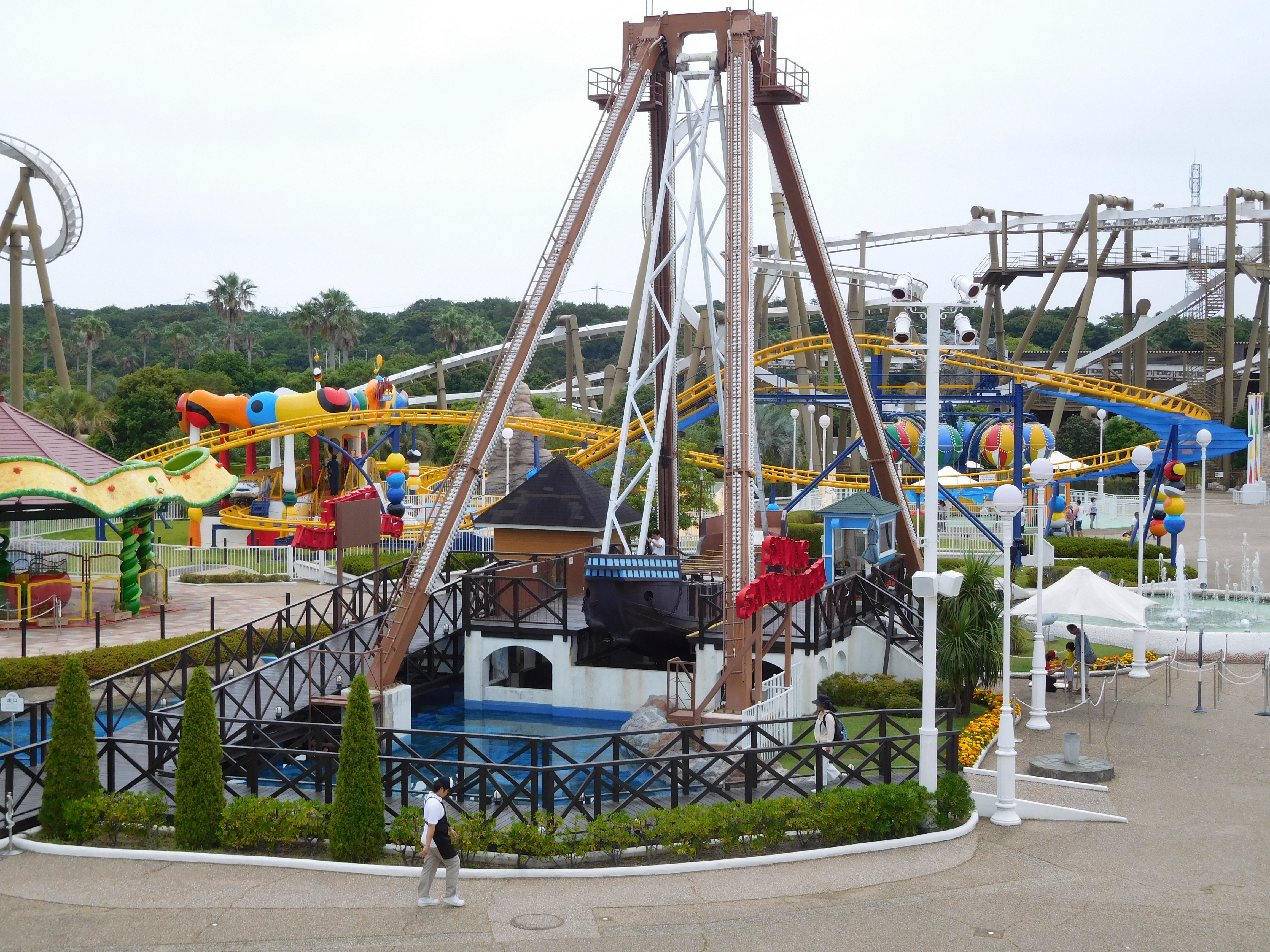
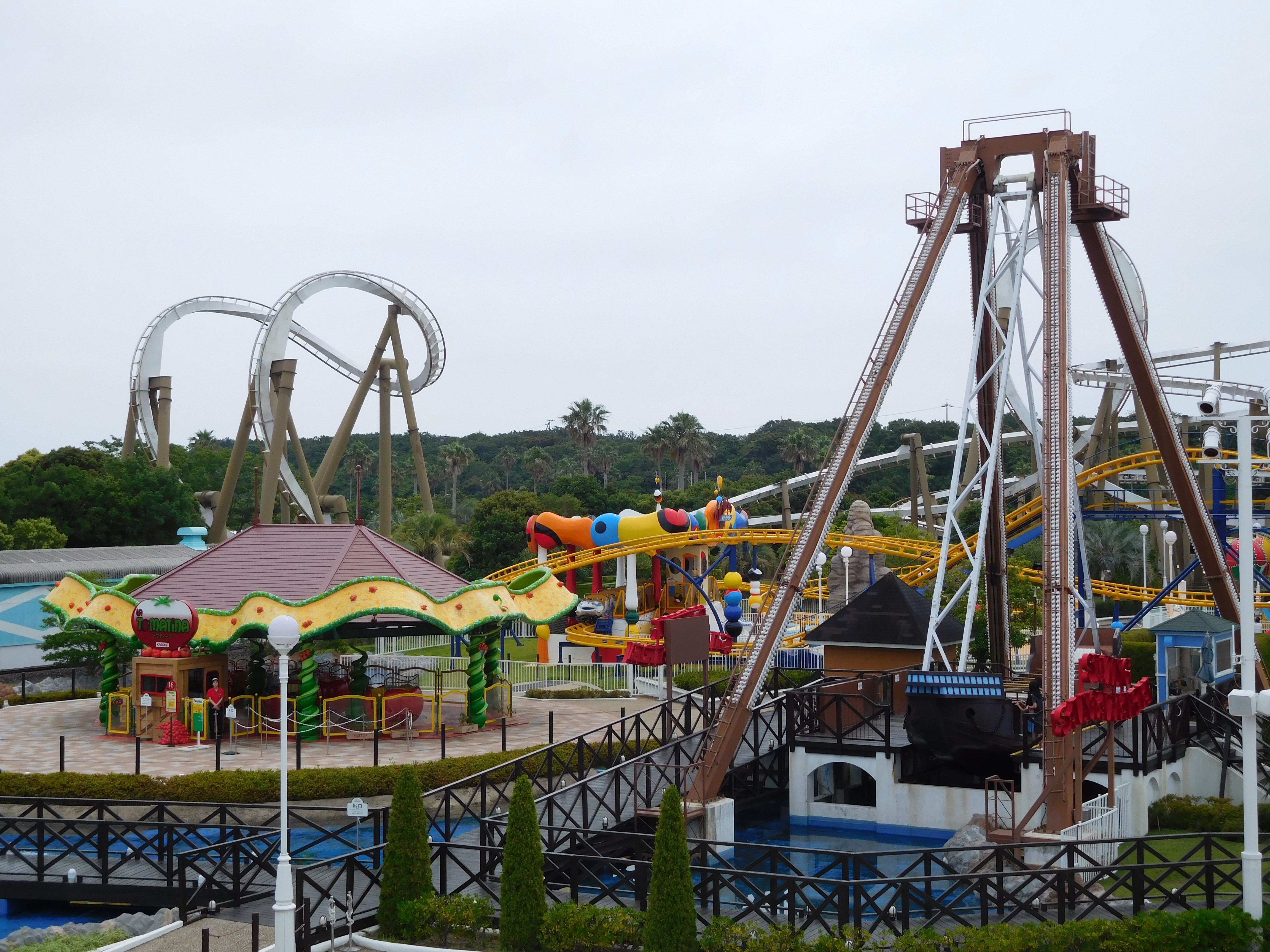

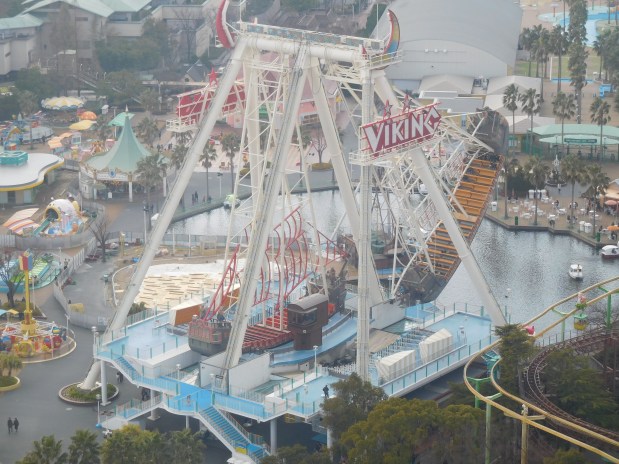
Over in Japan, Meisho manufactured various rides for foreign companies who were looking to sell to facilities in Japan. The Twin Dragon and the larger Super Viking were Meisho’s in-house offering of a Swinging Ship. In the photos, you can see both size of ships, with the Ship at Fuji-Q Highland having 24 seats, while the larger Swing Santa Maria at Parque Espana is much taller. Meisho Amusement Rides was renamed as Sanoyas Rides and is still active today. https://sanoyasrides.com/
 ParkVault